
Commercial Roof Inspection in Gilbert, AZ
Home / Commercial Roofing Services / Commercial Roof Inspection
What decision does the inspection need to answer? A Gilbert asset manager may be reviewing a repair proposal, preparing a replacement or trying to understand an unfamiliar roof. The visit should be developed around that question. We would inspect the assigned construction, preserve the findings and explain what further assessment is needed before the recommendation can become work.
An inspection report needs more than photographs. Each important observation should have a roof position and an understandable consequence for the proposed project. A loose termination, damaged sheet and uncertain backing condition are different findings. We keep them distinct so the owner can follow the recommendation without treating every item on the roof as a reason for the same repair.
How is the assignment defined before the visit?
We establish the property and roof area with the representative. Review the reason for the inspection and the available installation, repair and problem records. Confirm the requested access arrangements. The scope should identify the construction to be examined so a partial assignment is not later described as an assessment of areas never visited.
A purchase-related roof assessment has a particular decision behind it. Locate the information the reviewing parties need and the material questions still unresolved. We would assess the relevant roof and describe recommendations from those findings. A proposed purchase does not establish the condition of the assembly or remove the need to identify inaccessible construction.
For a requested Gilbert Town Hall inspection at 50 East Civic Center Drive, obtain the particular building area and records through the representative. Review the assigned roof and reported concerns. The findings would preserve that roof designation with the observations. This gives the asset manager a clear reference for understanding which construction the visit assessed.
Start the inspection with the owner’s decision
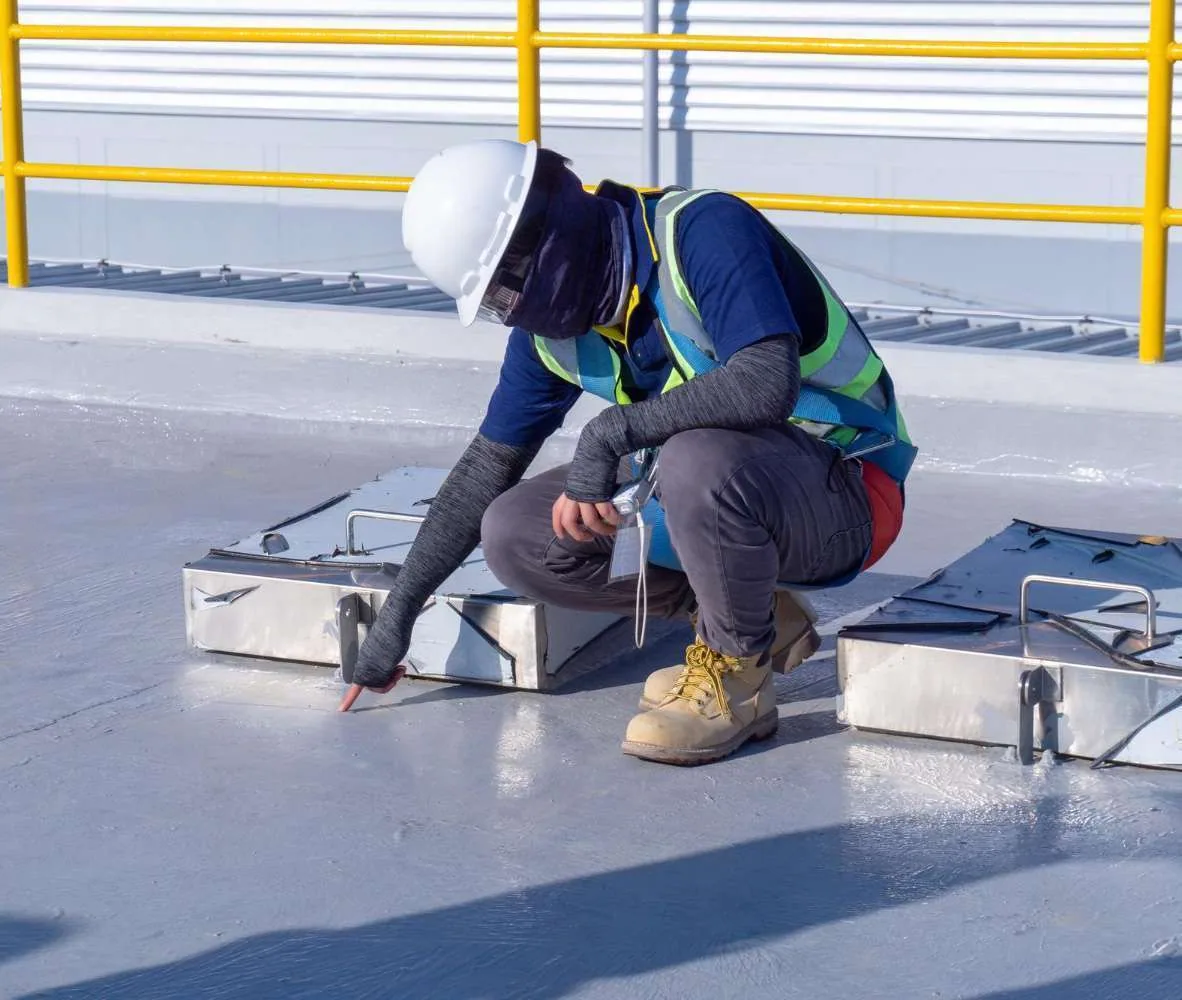
Tell us the roof area and the question you need answered. We will review the accessible construction, return located findings and explain the next recommended tasks.
Related Roofing Work
Which roof observations are recorded?
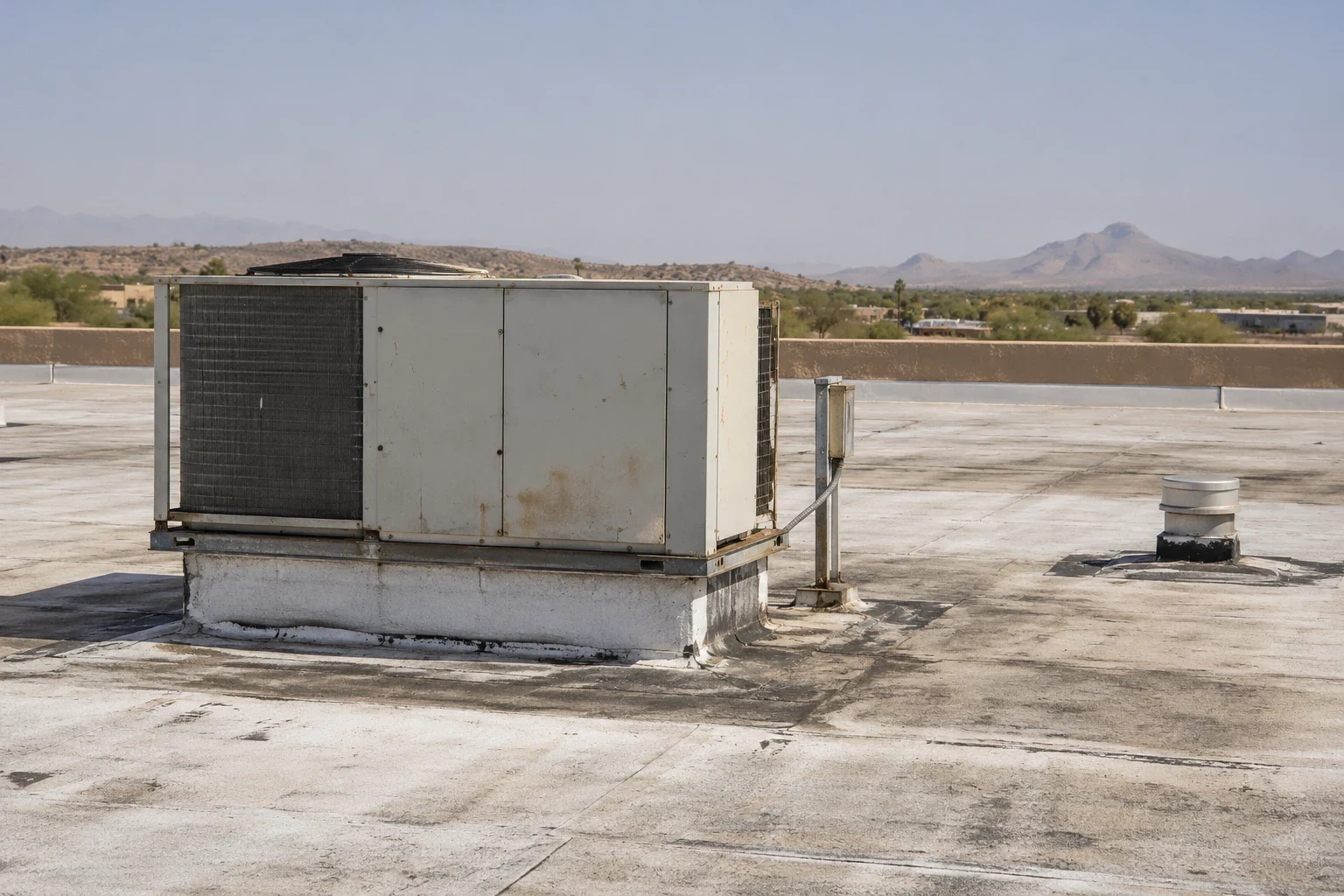
We examine accessible membrane surfaces, seams, wall flashings and component connections within the assignment. Locate previous repairs and visible damage. Review accessible edge metal, drains and scuppers. Record the condition found at each important position rather than describe every roof detail through one general rating.
A located photographic condition report should keep its references consistent. An image of a damaged lap belongs beside the roof position and written observation. Include neighboring construction where it helps explain the finding. The owner should be able to distinguish that observed seam concern from a separate backing question or a drainage component that needs another assessment.
Review reported interior symptoms where they are part of the assignment. Locate them alongside the corresponding roof investigation area. A stain may guide the inspection without identifying the entry point. We preserve what was reported and what was observed separately, then develop any needed additional investigation from the construction information available.
What cannot a surface inspection settle?
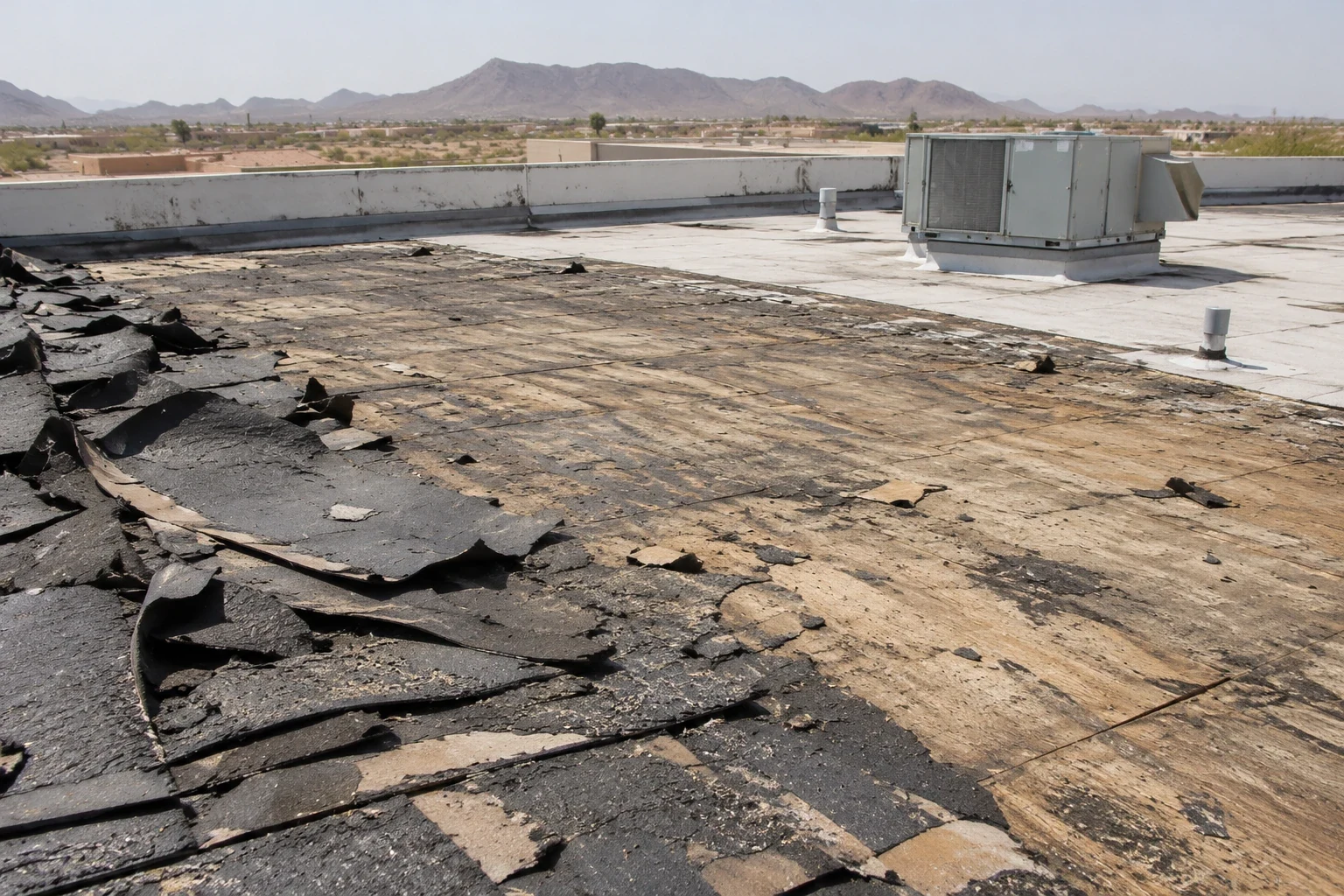
A visual visit has limits. Retained layers and concealed support may need records, exposure or another suitable assessment. Identify those questions at the areas where they affect the proposed work. The report should explain what further investigation can establish rather than quietly turn an unseen condition into a conclusion.
An assembly-specific moisture investigation can help direct further review where appropriate. WBDG describes infrared thermography as interpretive and dependent on construction and conditions. Confirm material concerns where necessary before developing removal or retained-layer quantities. A surface photograph and a thermal pattern provide different information; neither should be presented as an automatic account of every concealed layer.
Aerial images have another role. A separately arranged aerial assessment can preserve visible positions where the method is suitable. Identify what the images show and what needs closer inspection. We would keep that evidence within its actual limits rather than describe a photographed roof as fully assessed beneath the membrane.
What to Expect
How do findings become a recommendation?
We connect each important finding with its proposed next step. A local defect may need a developed repair. An uncertain material condition may need investigation first. More extensive findings may justify a broader comparison. The recommendation should state which observation supports that path and what information still changes the decision.
A defect-specific repair scope identifies its material boundary and supporting work. We develop that correction from the assessed detail. Where the inspection does not yet settle the retained construction, the recommendation should locate the question and further task. A priced patch does not answer a backing problem merely because it covers the same position.
For a requested Southeast Regional Library inspection at 775 North Greenfield Road, establish the designated roof through the representative. We would review its accessible details and available records. The report would preserve observations and unresolved construction questions at that assignment. Permanent recommendations would follow those findings rather than the building's name or a presumed roof age.
How will the report remain useful?
Keep the inspected area, dates and useful photographs with the written findings. Locate limitations and recommendations separately from observed conditions. Preserve the product identification where it is established and identify material questions requiring further review. The asset manager needs a report that can support another project discussion without overstating what the visit proved.
For Williams Field Road Commercial Area, confirm the particular building and assignment before developing arrangements. Obtain current work-area information through the representative. We would locate observations at the assessed roof and identify the steps needed for any permanent recommendation. That account should stay attached to the property and roof area actually examined.
Where the owner supplies warranty documents, review their relevant terms with the responsible parties. Record any required coordination as a document task alongside the construction findings. The inspection itself does not decide coverage. The roof recommendation still needs its observed material basis, whether or not another party is reviewing those documents.
Use the report as a dated assessment rather than a promise about future condition. A later visit should review current construction and changes made since the earlier account. Preserve new findings at their positions and distinguish them from the previous observations. This helps the owner follow what changed and why the next proposed work differs from the earlier recommendation.
A useful inspection record should make later comparisons possible. Keep photographs tied to roof locations and describe the surface condition, drainage, seams, penetrations, edge metal and any area that could not be reached. Separate visible defects from suspected concealed moisture, and state what additional opening or test would resolve that uncertainty. The owner can then compare a new report with previous repairs without assuming that a recurring symptom has the same cause or needs the same scope each time.
Questions Owners Ask
What should define a Gilbert commercial roof inspection?
State the roof area and decision the assessment needs to support. Review records and access arrangements with the representative before examining the assigned construction.
How should an inspection photograph be referenced?
Attach it to a roof position and written observation. Include relevant neighboring details so the owner can understand what the image supports.
Can a visual inspection settle concealed backing condition?
Hidden material may require records, exposure or another suitable assessment. Locate the unresolved question and further investigation before selecting permanent work.
What should the report say about aerial or thermal findings?
Describe the information each method provides and its limits. Review construction and confirm material concerns where needed rather than treat imaging as a complete concealed-layer assessment.
How does an owner use an inspection at a later project?
Keep it as a dated account of the construction examined. Review current conditions and later corrections before developing the next recommendation.