
Roof Asset Management in Gilbert, AZ
Home / Roofing Capabilities / Roof Asset Management
Asset managers usually inherit a roof as a single line in a spreadsheet: an install year, maybe a warranty, and a guess at remaining life. That isn't enough to decide whether to repair, recover or replace. Roof age alone doesn't pick the answer, and a nice photo of new-looking membrane says nothing about wet insulation underneath. Our roof asset management work in Gilbert builds a real file for each roof: what's up there, what's failing, what's been fixed and what still needs an answer. Every recommendation points to the detail it fixes, so when a repair is proposed, you can see why. In this climate, where sun and heat age membranes fast and monsoon storms test every drain, that file earns its keep.
For a building like Gilbert Town Hall on East Civic Center Drive or Southeast Regional Library on North Greenfield Road, we would start by meeting the facility contact, pulling whatever records exist and agreeing which roof areas come first. Each roof condition report then goes into the file, with photos and recommendations tied to that building.
One file for each roof section
Before anything gets combined, every building and roof section gets its own label, kept with the address and the site contact. One property name can hide a 20-year-old built-up roof over the warehouse and a newer TPO roof over the offices, each with its own repair history. Past inspections and repairs get filed under the right section. The next manager shouldn't have to piece the story together from a folder of undated photos.
For owners with several properties, our multi-site roof programs keep each building's file separate inside one program. Every entry notes when the roof was inspected, what we could reach and what questions were left open. Drawings and repair papers are attached with their dates and where they came from. When a later repair changes a detail, we update that section's history so the old description isn't mistaken for the current one.
Then there's the to-do list. Each item shows the defect, the recommended fix and where it stands: waiting on approval, done, or waiting on more testing. That lets you follow every roof decision from the first finding to the finished work, and see what still needs a response.

Start a roof file for your building
Set up an inspection for your Gilbert property. We'll document what's on the roof, what needs fixing now and what can wait, and give you a written file you can use to plan repairs and budgets.
Related Roofing Work

What an inspection can and can't tell you
We start with the concern that brought us out and the parts of the roof tied to it. A leak inside points us toward an area, but it doesn't prove where the water got in. Findings are tied to things you can find on the roof, like a curb, a drain or a parapet corner. Areas we couldn't reach are written down as such. The file keeps what we saw separate from what we were told, so a guess in an old report never turns into an accepted fact.
A commercial roof inspection provides those findings. We identify the membrane wherever it affects the repair method, because two roofs can look alike on top and need different materials to join them. If more testing is needed before choosing a fix, we say what and where. Any test cut has a clear reason and gets sealed afterward.
Photos stay tied to their location and the point they prove. A photo of one seam tells you about that seam. It doesn't prove the insulation across the whole building is dry, and the recommendation says as much.
Which roof sections can be kept?
Keeping an existing membrane in place is often the cheapest choice, but only when it's sound. The file says which sections we'd keep and why: membrane still bonded, seams tight, insulation dry where we tested. Where we haven't confirmed what's underneath, we say that plainly. You can see which options hinge on more testing. A repair that worked on another building doesn't prove it will work here, and a product name on an old invoice doesn't tell us what was installed.
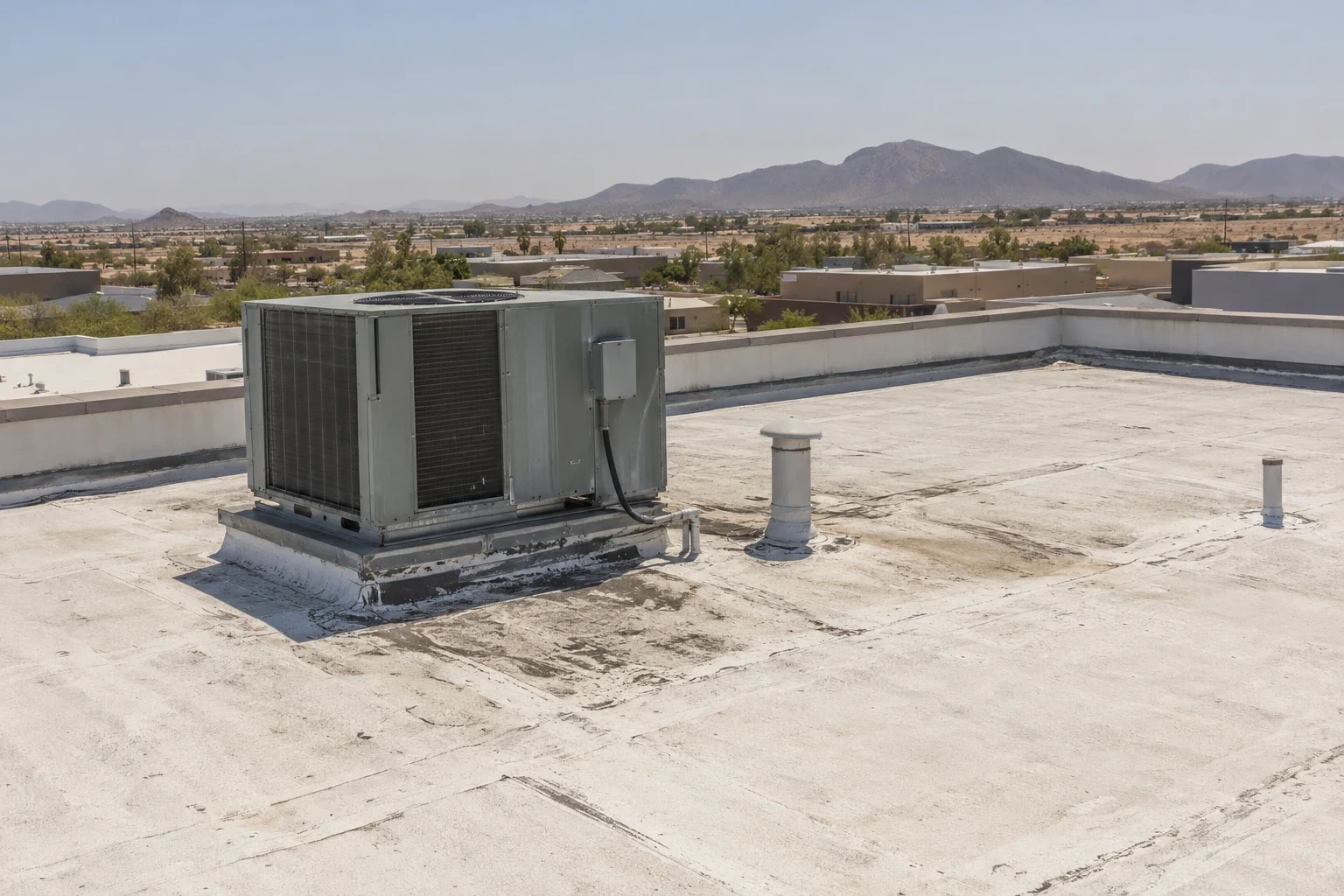
When a section needs commercial roof repair, the scope shows how much comes off to reach sound material, whether wet insulation or damaged wood is replaced, and how the new work ties in. A patch on the surface won't fix what's soaked underneath. Prep by other trades is listed next to the detail that needs it.
If the findings point to a bigger job, we price options with the same level of detail. More square footage doesn't mean every curb and wall flashing is included. Any doubt about keeping a section stays next to that option, not hidden in a general contingency.
What to Expect
What does the price include?
We break the proposed work into separate items for each building. A torn seam may need a repair now. A drain may just need cleaning twice a year. Another section may need a moisture scan before a replacement recommendation makes any sense. Each item says where it is on the roof and why it's there. That lets an asset manager separate this year's repairs from routine maintenance and from the bigger decisions still waiting on information, instead of lumping it all under "fair condition."
For each priced item, the file shows the roof area, what comes off, what stays and what goes back on. Work by other trades, such as the HVAC contractor resetting a unit, is listed with who's doing it. If an option depends on an open question, that question sits next to its price. A bigger option has to explain what extra work it buys, so a higher price isn't mistaken for a better fix.
When you make a decision, the file is updated: what was approved, what changed during the job and what's still pending. If a unit or wall repair is holding up the roofing, the file says what has to happen and who's doing it.
How are changes handled during work?
Tearing off old roofing can turn up things nobody planned for, like a second roof layer or a soft deck. When it does, we mark the spot, photograph it and explain how it changes the scope. The extra work is priced by the actual quantity needed, and the change goes through whatever approval process you've set up. The roof stays protected while you decide. You should always be able to see why the number moved.
For occupied buildings, occupied-building reroofing plans the tear-off in sections that can be closed up and made watertight the same day. The type of roof decides how big those sections can be. A short work window may not fit a full section, so we talk about that before setting the daily tear-off area. Any work we have to come back for is listed.
We can respond to roof emergencies at night, on weekends or over holidays. The file notes what we protected, where, and why. The permanent repair and any follow-up inspection stay listed separately. A temporary fix is not a finished repair.
What stays in the building file?
The building file ties together the inspection, the approval and the finished work. It holds the findings by location, the key photos, the approved scope and any approved changes. Completed repairs are added with the materials used and where they are on the roof. Open questions and other trades' unfinished work stay listed as open. A future manager should be able to see what was fixed and what's left without assuming an invoice covers every problem.
Every building we look after in the Gilbert Heritage District keeps its own file. When a new leak is reported, we check it against the history and plan the inspection it needs. Current findings decide the next job. The history helps tell a repeat failure from a new problem somewhere else.
Questions Owners Ask
What should the owner provide before the roof review?
The building address, the roof areas you want looked at, a site contact and any drawings, warranties or repair records you have. We use those as leads and still confirm on the roof what's actually there.
How does the file help with a repair decision?
It ties each repair to the defect it fixes and shows what comes off, what stays and what goes back on. If an option depends on something untested, like wet insulation, that's noted beside it so you know what you're betting on.
Why list work by other trades separately?
Because the roof often can't be finished until a rooftop unit is lifted or a wall is repaired. The file says what has to be ready and who's doing it. A scheduled visit doesn't mean that work is done.
How do I know why a price changed mid-job?
Every change is tied to something we found when the roof was opened, with a photo, the location and the extra quantity. You approve it through your normal process, and the area stays protected in the meantime.
Does one finished repair mean the whole roof is fine?
No. It means that detail was fixed and checked. Other open questions and unfinished work by other trades stay on the list, and areas we haven't inspected aren't assumed to be sound.