
Ponding Water Roof Repair in Gilbert, AZ
Home / Roof Damage Repair / Ponding Water Roof Repair
Water that sits on a flat roof for days after a monsoon storm is telling you something. The fix depends on why it is sitting there. Ponding water roof repair in Gilbert starts with the area where water collects and the drain or scupper that is supposed to empty it. We check the membrane, the drain flashing and the material around it. Standing water only shows where the low spot is, not where the drain line goes after it leaves the roof. A coat of elastomeric paint will not fix a clogged drain, a sagging deck or a crushed insulation board. We tell the owner what we found and which repair belongs to the roofer, so the money goes to the detail that actually needs it.
If ponding were reported at Gilbert Town Hall, 50 East Civic Center Drive, we would inspect the wet area and the drain that serves it. At Southeast Regional Library, 775 North Greenfield Road, we would do the same and note anything that needs further checking. A flashing failure repair review looks at the drain flashing and the membrane around it. The written report says which fix is roofing work and which drain-line question goes to a plumber.
Where was the water observed?
We start with where the water sits and which drain or scupper should be draining it. We ask the building staff when they saw it and how long it lasted, and dated photos help a lot. On the roof, we follow the path water should take and look for leaves, gravel, a lifted seam or a raised flashing that is blocking it. What staff remember about how long it stood is useful, but we keep it apart from what we can confirm on the visit. The owner needs to know how big the problem is before deciding between clearing a drain, a roof repair or a wider look at slope and drainage.
A commercial roof inspection covers the membrane around the pond and every drain we can reach. We also look at past work that might have changed the water path. Extra insulation, a rebuilt curb or a moved drain can all create a new low spot. We note what we were able to check and what is still open. A photo of a puddle does not tell you the roof slope or what is going on inside the drain pipe.
If drawings exist, we use them as a guide and note their date. We compare what is built to the drainage plan. If slope or something hidden drives the fix, we say what testing or design review is needed.
Get the ponding problem looked at
Schedule a roof inspection at your Gilbert building. We will show you where water is sitting and why, what roof repair fixes it, and which drain-line or slope questions need another trade, all in a written estimate.
Related Roofing Work
What does the drain inspection reach?
Three different problems can look the same from above: a drain strainer packed with debris, a failed seal between the membrane and the drain, and a blockage further down the pipe. Clearing the strainer may get water moving again, but the flashing around the drain bowl can still be torn or split. We clean what we can reach, then inspect the clamping ring, drain bowl and membrane. That way the owner pays for the repair that matches what we found, instead of treating every ponding call as the same job.
Our roof drain and scupper work separates the roof side of the drain from the pipe below it. If water still backs up after the strainer is clear, we note the location and refer the drain line to a plumber. Plumbing work stays separate from the roof repair, and the next step is clear to everyone.
Moving a drain or adding one is a bigger change than swapping a fitting. It changes where water flows and often needs a designer. We confirm the plumbing side is ready before we rebuild the roof flashing. A spot repair should say where it ends, not imply the whole roof now drains.
Which layers support the repair?
Before choosing repair materials, we confirm what roof system is actually there. TPO, PVC, modified bitumen and built-up roofs each need different patch materials and seam methods. Old records help if they say which section they cover. Two membranes can look alike and still not bond to each other. Prep is based on what we confirm at the repair spot. If we cannot see the insulation or deck and their condition matters, that stays an open question. Ponding often soaks insulation, and one sound drain does not prove the boards around it are dry.
A commercial roof repair scope should say what existing roof stays and how the drain area gets rebuilt. It should show how much has to be cut out to reach sound material, and include wood blocking or insulation replacement when they are part of the fix. If we open the roof and find more wet insulation than expected, the repair area may grow. We show you what we found before pricing the extra work. A patch on top cannot make up for soft insulation underneath.
Standing water also works on seams. A seam failure repair check looks at any laps that have opened in or near the pond. That work stays separate from plumbing. Each repair should have real work behind its price, which a vague line like "drainage repair" never shows.
What to Expect
Does a coating solve the ponding?
A coating needs a clean, sound roof to stick to, and it does nothing to change where water goes. So first we figure out why water is staying put. A clogged drain, a failed drain seal and a sunken section of deck each lead to different work. We keep that finding next to whatever fix we propose. Many coatings are not rated for long-term standing water, which is one more reason to fix the low spot first. The owner should be able to see which work solves the drainage problem and which work only preps the roof for a coating.
A roof coating restoration can make sense when the roof underneath is in good enough shape. We confirm the existing membrane will take the coating and list the repairs needed before it goes on. Wet insulation has to be found and replaced first. Any drainage question that affects the coating gets flagged. Cleaning and coating should never hide an open seam, a bad drain or wet boards underneath.
If the answer is a bigger rebuild, the estimate lists the layers removed, the new materials and the work at each drain. Tapered insulation or crickets can move water toward the drains, and we show how they change the slope. Design decisions and plumbing work stay listed. That way you can compare options by what each one actually fixes.
How is the roof opening planned?
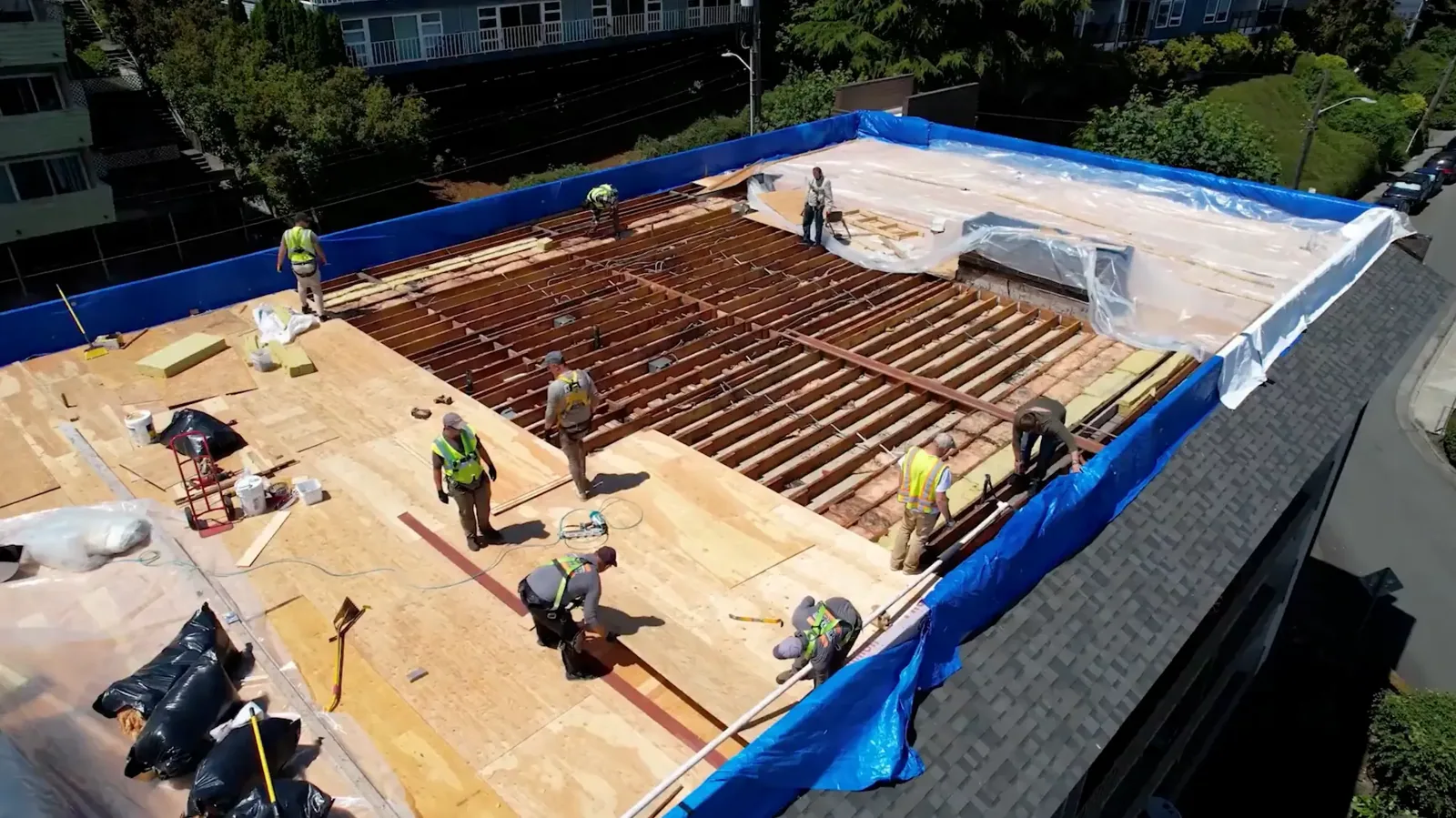
Before we cut into a roof, we go over the plan with the building's staff: where we are opening up, how material moves, and when. Whoever runs the spaces below handles their own prep, such as moving desks or tarping equipment. If a sprinkler line, alarm or data cable is near the work, that trade signs off on protecting it. Permissions are tied to the specific job. An inspection visit is not approval to open the roof later.
Once we open the roof, we may find more wet insulation or a soft deck. If so, we mark the added area and the extra rebuild needed. The area stays dry with temporary protection while the change is reviewed. If a plumber still has drain-line work to do, that stays on their list.
We take emergency calls at night, on weekends and on holidays. The report says what was patched. Permanent repair or more inspection may still be needed. Showing up fast does not mean the drain line is fixed or the insulation is dry.
What stays on file after the repair?
The closeout file shows each finished drain and flashing detail next to the scope that called for it. Prep photos are labeled by location. Any added quantities are tied to what we found when the roof was opened. Open plumbing items and unfinished work by other trades stay listed separately. One repaired drain does not mean every drainage problem is solved, and the file should be honest about.
Jobs in the Gilbert Heritage District follow the building's own records. We locate the actual drains and the existing roof before deciding on a fix. Later visits start with the roof as it is that day. Past repair notes stay in the file, labeled with what they actually covered.
Questions Owners Ask
Can a water position identify the entire drainage problem?
No. It shows where water collects, not why. We inspect the roof and the drain separately, and a hidden pipe blockage or an area we could not reach may still need checking.
Who addresses piping beyond the roof-facing connection?
A plumber handles the drain line and anything inside the building. The roofer handles the drain flashing and membrane, and needs a sound drain fitting to seal to. A plumber being scheduled does not mean the fitting is ready.
Why review retained layers before repairing the outlet area?
Because ponding often soaks the insulation around a drain. If wet boards stay under a new patch, the repair fails early. We check what is staying, and if a test cut is needed we explain why and patch it.
Does a coating amount resolve every ponding concern?
No. A coating does not change slope, dry out wet insulation or clear a blocked drain line. Those fixes come first, and the coating only makes sense once the roof under it is sound.
Which records describe the corrected drainage detail?
The closeout file: photos of each finished drain and flashing detail, prep photos by location and any changed quantities. Open plumbing items and unfinished work by others are listed separately from the roofing we completed.