
Flashing Failure Repair in Gilbert, AZ
Home / Roof Damage Repair / Flashing Failure Repair
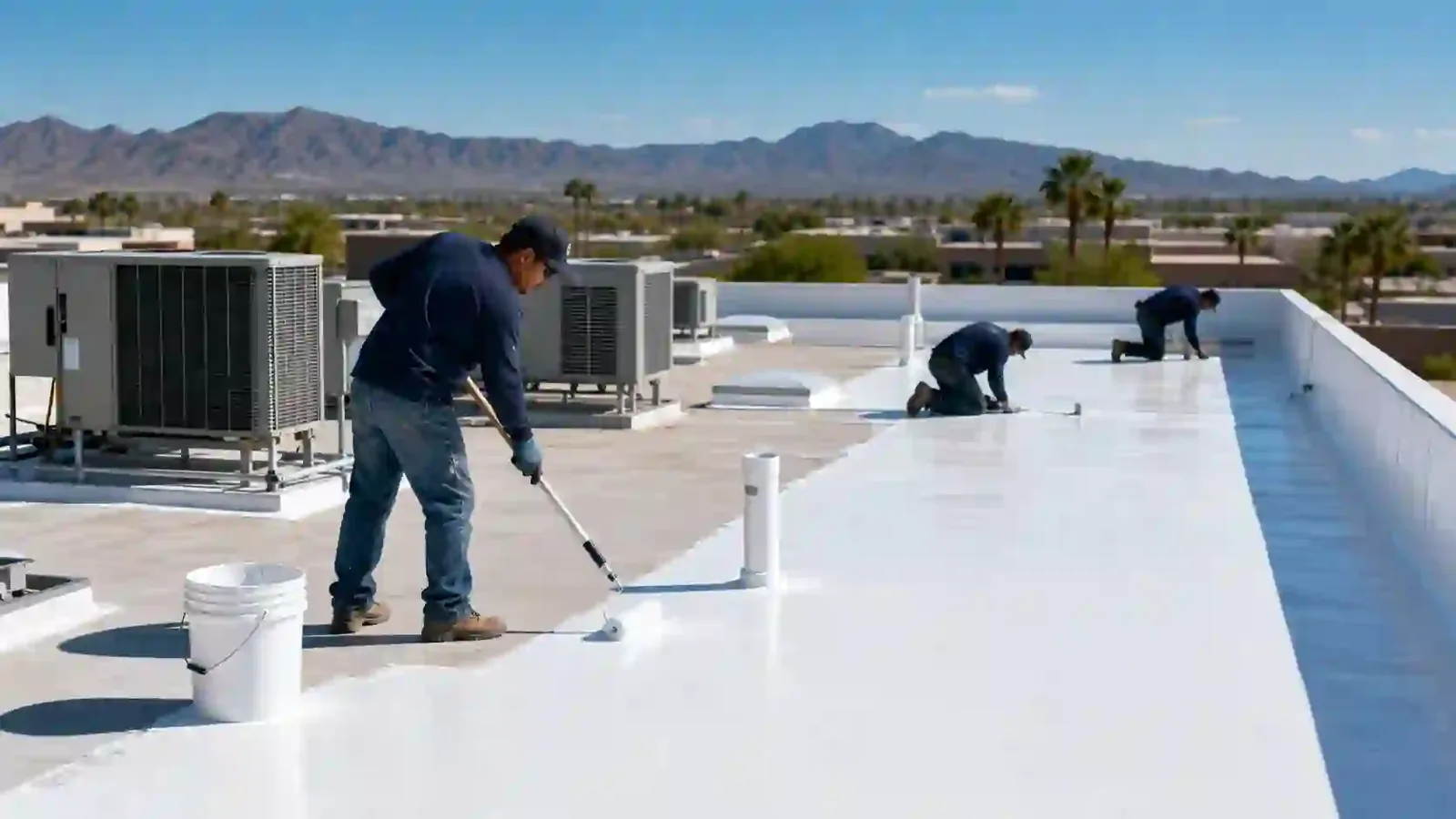
Most flashing leaks in Gilbert show up in the same places: where the roof meets a parapet wall, around the base of a rooftop unit curb, and at drains and scuppers. Summer sun bakes the membrane and sealant at those joints, the metal moves with every hot-to-cool swing, and the first heavy monsoon rain finds the gap. Before we price anything, we want to know what the new flashing will fasten to once the old piece comes off. If the wood nailer or wall sheathing behind it is wet or rotted, a new strip of membrane over the top won't last, and a photo of the finished edge can't tell you that. Our estimate spells out what gets torn off, what gets rebuilt underneath and what permanent flashing goes back on.
On a public building like Gilbert Town Hall on East Civic Center Drive or Southeast Regional Library on North Greenfield Road, we would start at the spot facility staff point to and work outward. Flashing failures often sit next to open seams, so we check whether seam failure repair belongs in the same scope before a crew replaces anything.
Which flashing detail actually failed?
A leaking parapet, a leaking HVAC curb and a leaking roof drain are three different problems. They are built differently and they fail for different reasons. So the first job on the roof is to find the specific detail that let water in, and to keep that separate from where the stain showed up inside. Water can run along the deck or insulation for several feet before it drips through a ceiling tile. One bad corner also doesn't explain every leak in the building.
A roof inspection sorts this out. At a wall, we check the base flashing, the termination bar or counterflashing above it, and the coping on top. At a curb, we look at how the membrane turns up the sides and whether the unit itself is letting water in from above. At a drain or scupper, we separate the roof flashing from any problem in the pipe below.
We photograph each defect up close and from far enough back to show where it sits. Old repair invoices and drawings help when we know what they actually cover. If the problem is hidden behind metal or sealant, we tell you where we'd open it and how that spot gets closed back up.
Get the whole flashing detail fixed
Tell us where the leak is. We'll inspect the flashing on your Gilbert building, check the backing behind it and send a written estimate for the tear-off, the rebuild and the new flashing, with any open questions listed.
Related Roofing Work
What's behind the old flashing?
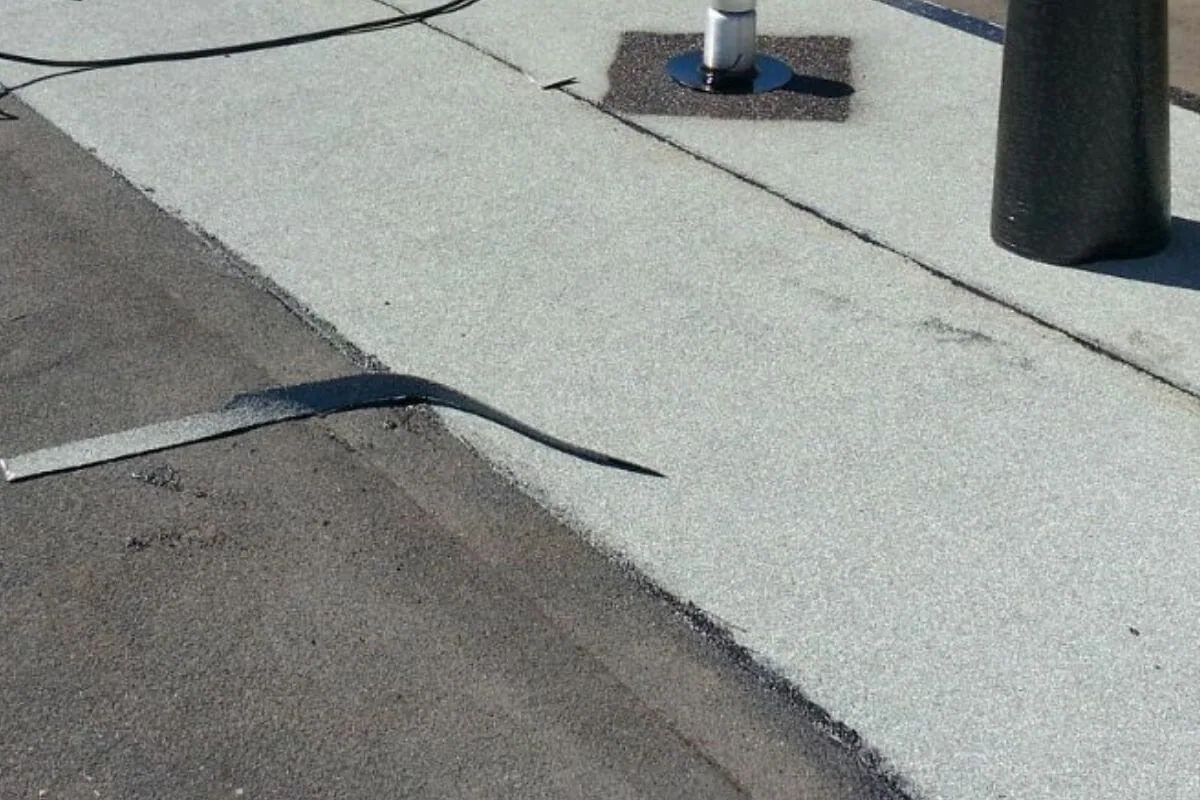
New flashing needs something solid on both sides: the roof, and the wall, curb or edge it runs up. Once the old flashing is peeled back, we look at the membrane that will stay, the fasteners, and the wood blocking or sheathing behind it. On Gilbert roofs, years of sun damage often hide soft, wet wood where a slow leak has been sitting. Gluing new material over that just traps the problem. We sort out what can stay, what has to come out and what needs a closer look before anyone decides.
At roof edges and parapet caps, our edge metal and coping work often goes along with the flashing repair. If the sheathing or nailer needs rebuilding, that happens before the membrane goes back on, and the estimate says who does it. Anything that changes the wall structure itself goes to an engineer or architect, not a roofing crew.
Sometimes removal turns up more rot than anyone expected. When that happens, we stop, photograph it, mark where it is and explain how much extra material it needs before the scope changes. You see exactly why the repair grew.
What will the new flashing tie into?
The new flashing has to be compatible with the membrane already on the roof. TPO, PVC, modified bitumen, built-up and coated roofs each join differently, and two gray sheets can look alike while needing completely different adhesives or welding. We confirm what's there with a small test cut or the original roof documents if they exist. If we can't confirm a hidden layer, we say so instead of guessing. What worked on the building across the street is no guide.
A proper commercial roof repair estimate shows how far back the old material comes off, where the new flashing laps onto sound membrane and whether wet insulation or damaged backing gets replaced in the same pass. A patch on top can't dry out soaked insulation underneath. If we find more bad material during the work, we show you where before adding anything.
A puncture a few feet away is a separate repair. Membrane puncture repair gets its own line, so you can see what each fix costs. Rebuilding the wall flashing doesn't mean the rest of the roof was checked or fixed.
What to Expect
Who handles the rooftop unit?
When the leak is at an HVAC curb, two trades are involved. Your mechanical contractor disconnects, lifts or services the unit if that's needed. We handle the curb flashing, the membrane around it and the new seal at the base. If the unit has to be raised or reset before we can finish, the estimate says so and names who does it. Booking the HVAC tech for the same morning doesn't mean the curb will be clear when we get there, so we confirm it on the roof.
Our rooftop curb and equipment work starts with the curb walls, the wood under the flashing and the membrane around the base. If a new or larger unit changes the curb or its supports, a mechanical engineer should review it before we flash it in.
Drains work the same way. We repair the roof side of the drain or scupper, and plumbing problems below the deck stay with your plumber. At walls, stucco or masonry repairs above the flashing are listed as separate work, so it's clear what the roofing price includes.
How do we schedule the tear-off?
Opening up flashing means debris, adhesive odors and some noise over occupied space. Before the crew shows up, we go over it with the facility manager: where we stage and get on the roof, which rooms sit under the work, and which tenants need a heads-up. If there's a server room or sensitive equipment below, the people who run it decide what protection it needs. The type of building doesn't tell us when it's quiet, so we ask. Permission to inspect last week isn't permission to open a wall this week.
We plan the work so every section we open is closed and watertight the same day. In monsoon season that matters, because afternoon storms build fast over the valley. If a short window won't fit the whole repair, we split it into stages and tell you what's left and when we're coming back.
If removal shows more damage than expected, we show you where and what it adds, and get approval the way you've asked us to. The area stays protected while you decide. For active leaks we can come out nights, weekends and holidays. A temporary patch is listed as temporary, with the permanent fix still on the list.
What you get when it's done
When the flashing is finished, you get photos of the rebuilt backing taken before it was closed up, plus shots of the final detail. Any change in quantities is tied to the damage we found at that spot. Wall or equipment work still owed by other trades is listed on its own. One repaired corner doesn't fix every leak in the building, so open items stay open on paper. The next inspection then starts from what was actually built, not from how the roof looks.
Each building we work on in Cooley Station gets its own repair file. We confirm the flashing material at each detail before choosing the replacement. Later recommendations are based on what's on the roof now, with earlier repairs kept as history.
Questions Owners Ask
Why check what's behind the flashing before pricing it?
Because new flashing is only as good as what it's fastened to. If the wood blocking or wall sheathing is wet or rotted, it has to be rebuilt first. A strip of membrane over the top can't fix that, and the leak comes back.
Does the spot where water shows up inside tell you which flashing failed?
Not always. Water often runs along the deck or insulation before it drips through. We trace it on the roof and inspect the flashing directly, and we tell you if another detail could still be involved.
How do you choose materials for the new flashing?
We match the membrane already on the roof. TPO, PVC and modified bitumen each join differently, so we confirm the existing system first, with a small test cut if needed, instead of going by looks.
Who gets the rooftop unit ready for a curb repair?
Your mechanical contractor disconnects or lifts the unit. We handle the curb flashing and membrane. We check on the roof that the curb is actually clear before we start, not just that the HVAC visit was booked.
What do I get when the repair is finished?
Photos of the rebuilt backing and the finished flashing, an explanation of any quantity changes, and a list of anything still open, such as wall or equipment work by other trades.