
Roof Condition Reports in Gilbert, AZ
Home / Roofing Capabilities / Roof Condition Reports
A roof report is only useful if the next person who picks it up can walk onto the roof and find what it describes. Plenty of reports fail that test. They say "membrane deteriorated" or "flashing needs attention" with no location, a dozen photos with no captions, and a price at the bottom. Our condition reports for Gilbert buildings name the building and roof section, describe each defect in plain words, and pin every photo to a spot on a roof plan. We also say what we couldn't see, like a hatch that was locked or insulation we didn't open up, because that affects how far you can trust the recommendation. Each finding gets a next step: repair, maintenance or a closer look.
If Gilbert Town Hall on East Civic Center Drive or Southeast Regional Library on North Greenfield Road asked for a report, we would start by agreeing which roof areas are included and what question staff want answered. Over time those reports become the core of a roof asset management file, so the next manager can line up photos, materials and past repairs with the right roof.
Which part of the roof did we look at?
The report starts by saying exactly which building and which roof sections we inspected, using things you can see on site: the roof over the loading dock, the low roof east of the main entry, the area around the two big rooftop units. A campus with one name can have five roofs of different ages and materials, so we keep them apart. We note what prompted the visit, such as a leak, a sale or a budget question, and who asked.
We also list what kept us from seeing everything. A section with no safe access isn't part of the findings. A clean photo of membrane can't show the condition of wall sheathing behind the flashing. Those gaps are written next to the detail they affect, not tucked into a general disclaimer at the end, so you know where more digging could change the scope.
Old drawings and invoices are useful, and we say where each one came from. An invoice tells you what material was bought, not how it was installed or what changed afterward. A drawing from the original build may not match the roof today.
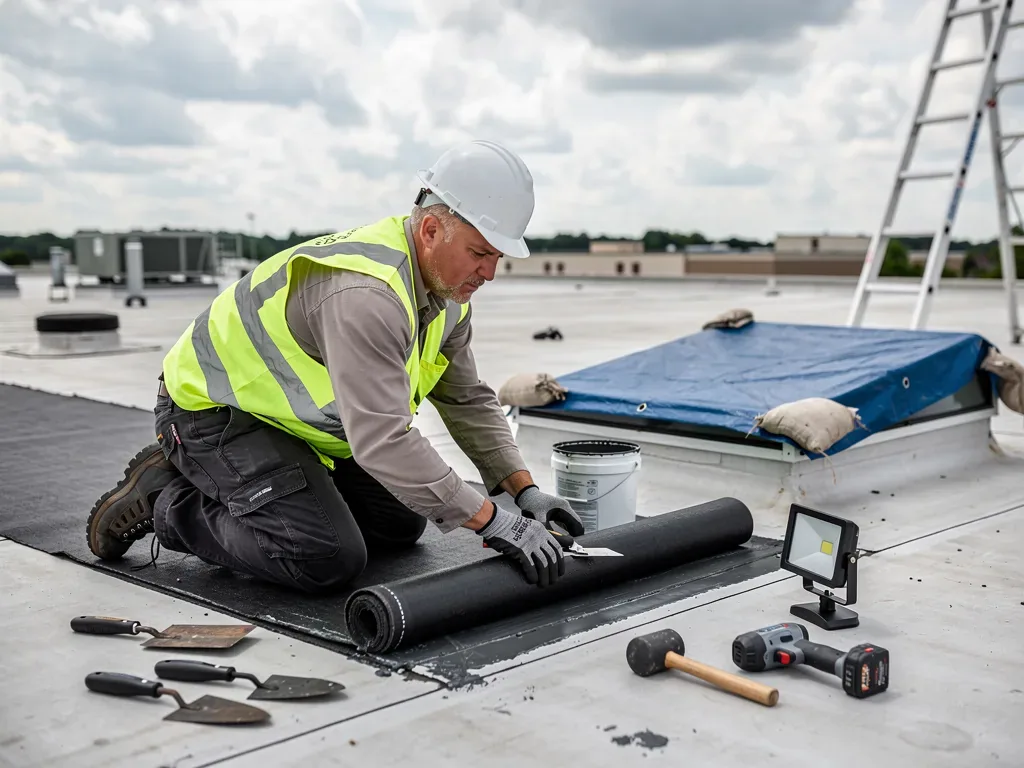
Get a roof report you can use
Schedule an inspection of your Gilbert building. You'll get a written report with located photos, a recommended next step for each problem we find and a clear list of what still needs a closer look.
Related Roofing Work
What did we actually find?
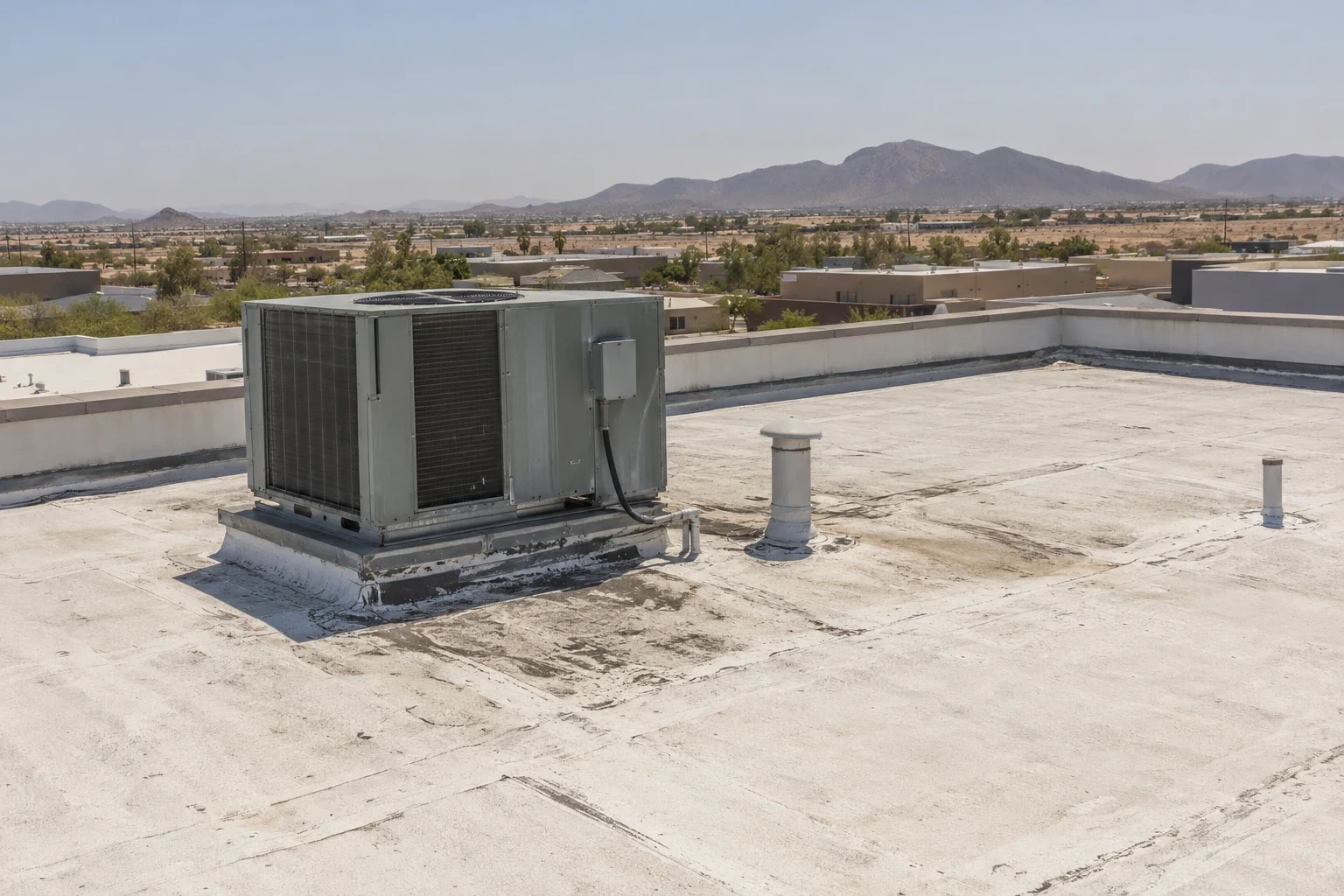
Each finding should let someone else go straight to the problem. We name the roof section, the nearby landmark and the defect itself. An open seam, a split at a parapet corner and a scupper packed with debris are different problems with different fixes, and the report treats them that way. Every finding has a photo next to it. In Gilbert, the usual list includes UV-cracked membrane, sealant that has shrunk away from metal, blistered coatings and drains clogged with windblown dirt after a monsoon.
A commercial roof inspection is where the findings come from. If there's a leak inside, we record where it shows up separately from what we found on the roof, and we say whether we traced the path between them or not. We name the roof membrane where it matters for the repair method, and every measurement is tied to the area it describes.
Photos come in pairs: a wide shot so you can locate the spot and a close-up so you can see the problem, both dated. A photo of a cut in the membrane doesn't tell you whether the insulation below is wet. If the repair depends on that, the report says what test would answer it.
Which findings need a closer look?
Some questions can't be answered from the surface. If wet insulation or rotted decking would change whether a section gets patched or replaced, the report says so and recommends where to open the roof, what we're looking for and how the opening gets sealed again. You should know why a test cut is worth paying for before you approve it. A vague worry about the whole roof isn't a reason to cut it open at random.
An infrared moisture survey can narrow down where to make those cuts. It shows temperature differences across the roof at night, which often point to trapped water, but it doesn't confirm what's underneath on its own. We list the scan results and the core samples separately, and note where a decision still needs physical proof. One dry core doesn't clear the rest of an unscanned section.
Before we open anything, we talk with the facility manager about what sits below: offices, stock, servers or sensitive equipment. The people in charge of those spaces decide what protection they need, and we plan the cut around it.
What to Expect
How does a finding turn into work?
Every finding ends with a recommended next step. A torn flashing corner might need a defined repair. A drain choked with dirt and leaves needs maintenance. A section with possible wet insulation may need test cuts before anyone can say whether to repair or replace it. We explain what each step fixes and what it leaves open, so you can tell which items are ready to price and which are waiting on more information.
When a finding becomes a commercial roof repair, the scope says where the repair is, what comes off, what stays and what gets installed. If the HVAC contractor or a wall repair has to happen first, that's listed too. Any extra test opening comes with the reason for it and how it gets sealed.
The same findings feed roof capital planning. A full replacement or a recover is priced separately from spot repairs, with the extra roof area, insulation and flashing it includes. That way you can compare options on what you actually get, and see the evidence behind each one.
What if the roof turns out different than expected?
Sometimes the crew opens a section and finds a second roof underneath, wet insulation, or a deck that's worse than the core samples suggested. When that happens, we photograph it where it was found, explain what extra removal or rebuilding it needs, and give you the added quantity tied to that work. You approve the change the way you've told us to handle changes. The opening stays protected while you decide. A contingency line in the estimate is not the same as work done, and the report keeps them apart.
The original finding stays in the report along with the update, so you can see what changed and why. If another trade's work affects the roof detail, we note what has to be ready before we can finish. Their open items stay separate from the roofing we completed.
For active leaks we can respond overnight, on weekends and over holidays. The report lists each temporary fix by location, why it was put there and the permanent repair still needed. An emergency visit is not a full inspection, and we don't present it as one.
What can the next reviewer count on?
The next person to read the report needs to tell what was recommended from what was done. So we keep the original finding, the work that was approved, the work that was performed and photos of the finished detail together. Changes are tied to the condition that caused them. Open questions and other trades' work stay on their own list. A proposal or invoice never stands in for proof that the work was built.
Each building in the Higley area keeps its own report history. If a leak comes back, we check it against the earlier finding and repair before deciding what to test next. A fresh inspection tells us what the roof needs now. The history helps you see whether it's the same detail failing again or a new problem somewhere else.
Questions Owners Ask
What should a roof report state before its findings?
Which building and roof sections were inspected, why the inspection was requested and which areas we couldn't reach. That tells you how much of the roof the findings actually cover.
How do photos back up the recommendation?
Each photo is tied to a roof section and a specific detail, with a wide shot to locate it and a close-up to show the defect. A surface photo shows what's visible; it can't prove the condition of insulation or decking underneath.
Why does the report call out further testing separately?
Because a hidden condition, like wet insulation, can decide whether a section gets repaired or replaced. We say where to open the roof, what we're checking and how the opening gets sealed, so you know why the test is worth doing.
How does a finding connect to a repair price?
The repair scope lists the location, what comes off, what stays and what goes back on, plus any prep by other trades. If an option depends on an unanswered question, that question is listed next to the price.
What stays open in the report after the work is done?
Any untested areas, plus equipment or wall work another trade still owes. Completed roofing is listed separately, and open items stay open until someone confirms them on the roof.