
Office Building Roofing in Gilbert, AZ
Home / Property Types We Roof / Office Building Roofing
Office roofs usually come to us as a stack of tenant complaints: a stained ceiling tile in suite 210, a drip by the conference room window, a bucket in the break room after the last monsoon. The temptation is to send a crew up with sealant and call it one repair. That rarely works. Each leak needs to be traced to the roof detail above it, whether that's a parapet wall, an HVAC curb, a drain or a seam. We walk the roof, match what we find to each report and tell you which leaks share a cause and which don't. You then compare real fixes, not a single lump-sum guess, and you know ahead of time what prep the offices below will need.
Every office job starts with the property's own address, even for buildings near landmarks like Gilbert Town Hall on East Civic Center Drive or Southeast Regional Library on North Greenfield Road. Send us the floors or suites affected and the person who can let us in. Our Rivulon office roof work runs the same way. Old repair photos and roof drawings help us plan the visit so we don't repeat work that already failed.
Do the tenant leaks have the same cause?
We start by gathering where and when each leak showed up, plus any photos and notes on past repairs. Leaks near each other aren't always related. Water at the top of an exterior wall might be a failed wall joint or bad flashing. A ceiling drip can come from a roof penetration twenty feet away. Condensate from a rooftop unit may look like a roof leak and turn out to be an HVAC problem. We match what we find on the roof to each location inside, and say where we still need access. That gives the property manager something concrete to tell tenants and the next contractor.
During roof leak repair, we describe the defect we found and the repair that fixes it. If a detail we couldn't reach is still a suspect, we name the next step instead of throwing a sealant allowance at it. If wet insulation might change the plan, we explain how we'd test for it and how any test cut gets sealed. Each item is tied to its location, so you can follow the price from the leak report to the finding to the work.

Turn tenant leak reports into a clear roof plan
Tell us which suites have had leaks and send any repair history you have. We'll inspect the roof above your Gilbert office, explain what we find and lay out the repair options and tenant prep for each.
Related Roofing Work
What should wall and edge repairs include?
Wall flashing only holds if it's fastened to something solid and properly sealed at the top. Before deciding what to tear off, we check the wood or sheathing behind the flashing and the wall around it. Damaged stucco, block or framing above the roofline may need another contractor to rebuild it first, and the estimate says so. The roofing price lists what membrane stays, what comes off and how the new flashing ties in. A photo of the flashing alone doesn't show what it takes to rebuild it.
For edge metal, coping and gutters, we check how the metal is fastened and what's under it. A clogged gutter, a split joint and a broken downspout are three different fixes, and the last one may be a plumber's job. Changing the edge design may need an architect or engineer to sign off. If we open things up and find wider damage, we show you where it is and how it changes the scope, so the approval matches what we found instead of an unexplained increase.
When does replacing the roof make more sense?
A good comparison shows what stays on the building and what gets replaced. Spot repairs make sense when the problem is limited and the roof around it is sound. A coating needs a sound surface and the flashing repairs done first. A recover over the old roof means testing what's underneath and checking it meets the requirements for a second layer. For roof replacement, we spell out the tear-off, the new insulation and membrane, how it's fastened and the finished edges and flashings, and why the findings point that way.
If you're offered a white TPO roof, you're buying more than the sheet. Compare the insulation, the fastening and the flashing work, plus who handles staging and the HVAC disconnects. A medical office roof has its own rules for work near patient areas. A flex industrial roof is driven by how that space is used. For an office, the plan has to fit the tenants below and the equipment on top.
What to Expect
Which office preparations need a point person?
We mark the tear-off area with the property manager and figure out which suites, hallways and entrances sit below it. Then we ask who needs notice and who can get us into those spaces. The building contact gives us the rules for HVAC intakes, dust and working indoors. We talk through the noise and smells each roofing method creates, since a torch-down system and a mechanically fastened TPO roof feel very different to tenants. Deliveries, dumpster placement and keeping pedestrians clear of the work zone can affect the parking lot and lobby, not just the roof. Each stage has a named contact for those arrangements.
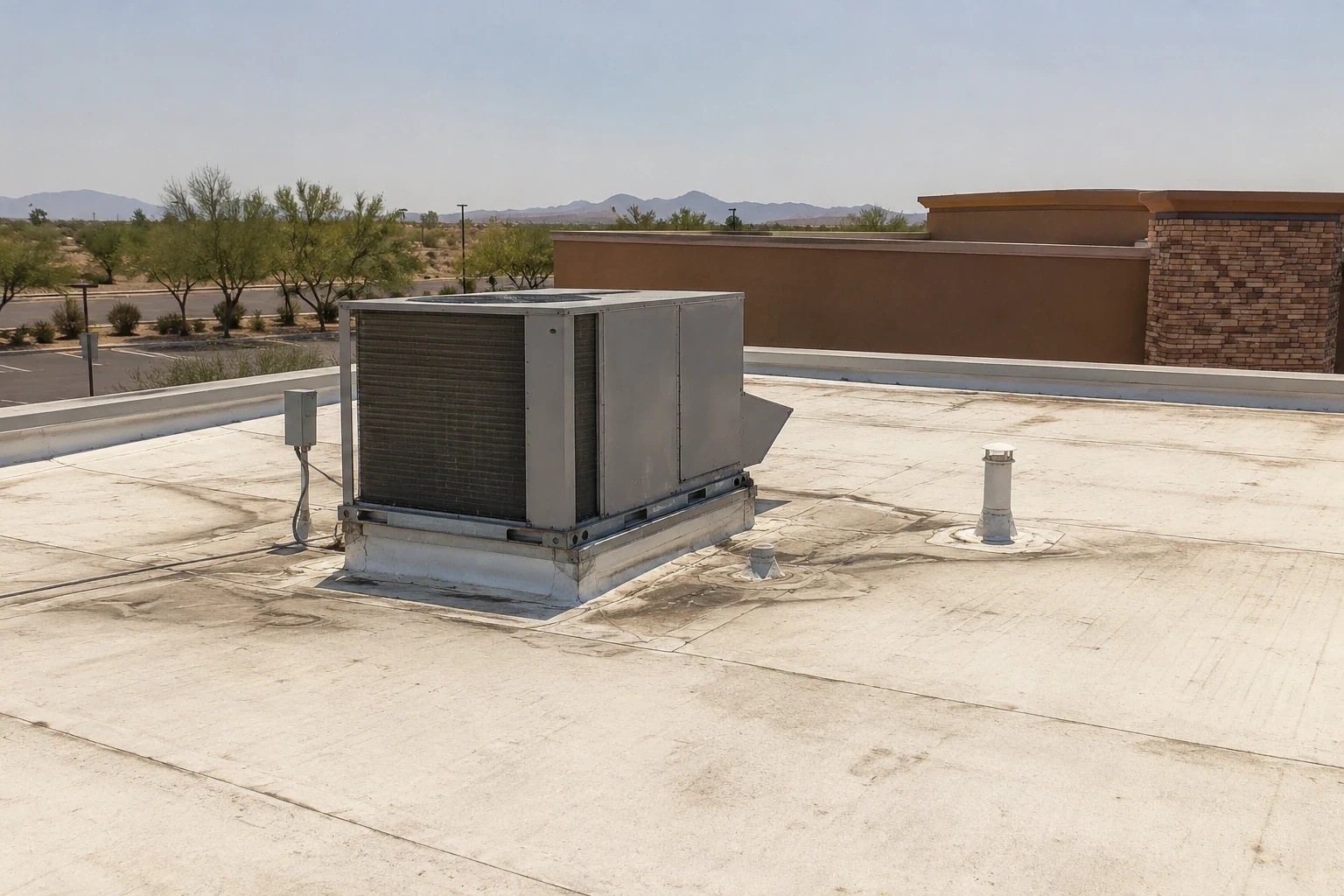
With occupied-building reroofing, we explain how every section is sealed at the end of the day. If we find more rot and the opening gets bigger, the arrangements below may change too, and that goes into the revised price. For rooftop curb and equipment work, the HVAC contractor handles shutting units down and lifting them. Their work has to be done before we flash the curb, so you'll always know who's up next.
What should management get after the work?
The closeout should make clear which repairs are permanent and which are temporary. We mark each repaired spot on a roof plan, show that test cuts were sealed and hand over the product information for what was installed. Any approved changes to the quantities come with the reason. HVAC or wall work still waiting on another contractor is listed. With that, the property manager can tell a tenant exactly what was fixed above their suite and line up whatever is still open, instead of getting a vague "all done" while other work is still outstanding.
For preventive roof maintenance, we keep photos of each detail with the work done and the next inspection date. We check drains and scuppers where they affect the roof, and list drain repair separately from debris cleanout or plumbing. Design changes and plumbing go to the right trade. For emergencies we answer overnight, on weekends and over holidays. Your site contact gets us onto the roof, and we discuss what to protect right away and what inspection the permanent fix will need.
Office work goes smoother when the roof zones are matched to the floors, entrances and tenant spaces below. We note where noisy tear-off, overhead protection or temporary closures will affect people, and the facility contact sends the approved notice. Rooftop equipment is protected and required exit paths stay clear while each section is open. At the end, you get photos by location and a short list of completed work, items still open and who is following up on each.
Questions Owners Ask
Should several office leaks be priced as one repair?
Not usually. We trace each leak to the roof and see whether they share a defect. Some may need different repairs, and some may turn out to be HVAC or wall problems. Where the findings call for separate work, each leak gets its own line.
What should a wall flashing price explain?
What comes off, what roofing stays, how the new flashing is fastened and sealed at the top, and any wall repair another contractor has to do first. If the crew has to remove more, the reason comes with the change.
How should tenants get ready for roof work?
The property manager reviews the work area and the debris route with us, gets the building's rules for HVAC intakes and indoor protection, and names who sends notices or moves people if needed. If the work area grows, those plans get checked again.
What records should the owner keep after the job?
Photos by location, the installed product information and the approved quantities, plus a note of sealed test cuts and any work still owed by other trades. Those records make it easier to handle the next tenant complaint.