Fire Damage Roof Repair in Gilbert, AZ
Home / Roof Damage Repair / Fire Damage Roof Repair
After a fire, the first question on a Gilbert roof is a practical one: how much of it can we safely get onto and open up? Until that is settled, nobody should be signing off on a repair quantity. Heat from a fire below can soften insulation, scorch the underside of the deck and loosen fasteners long before anything shows on top of the membrane. We inspect the areas we are cleared to walk and lay out the permanent repair we would recommend. Questions about the structure go to an engineer, and utility or equipment decisions stay with those trades. A photo of the roof surface cannot tell anyone whether the deck underneath is still sound, so our report keeps three things apart: what we inspected, what still needs a closer look, and what someone else has to prepare before the roof can be finished.
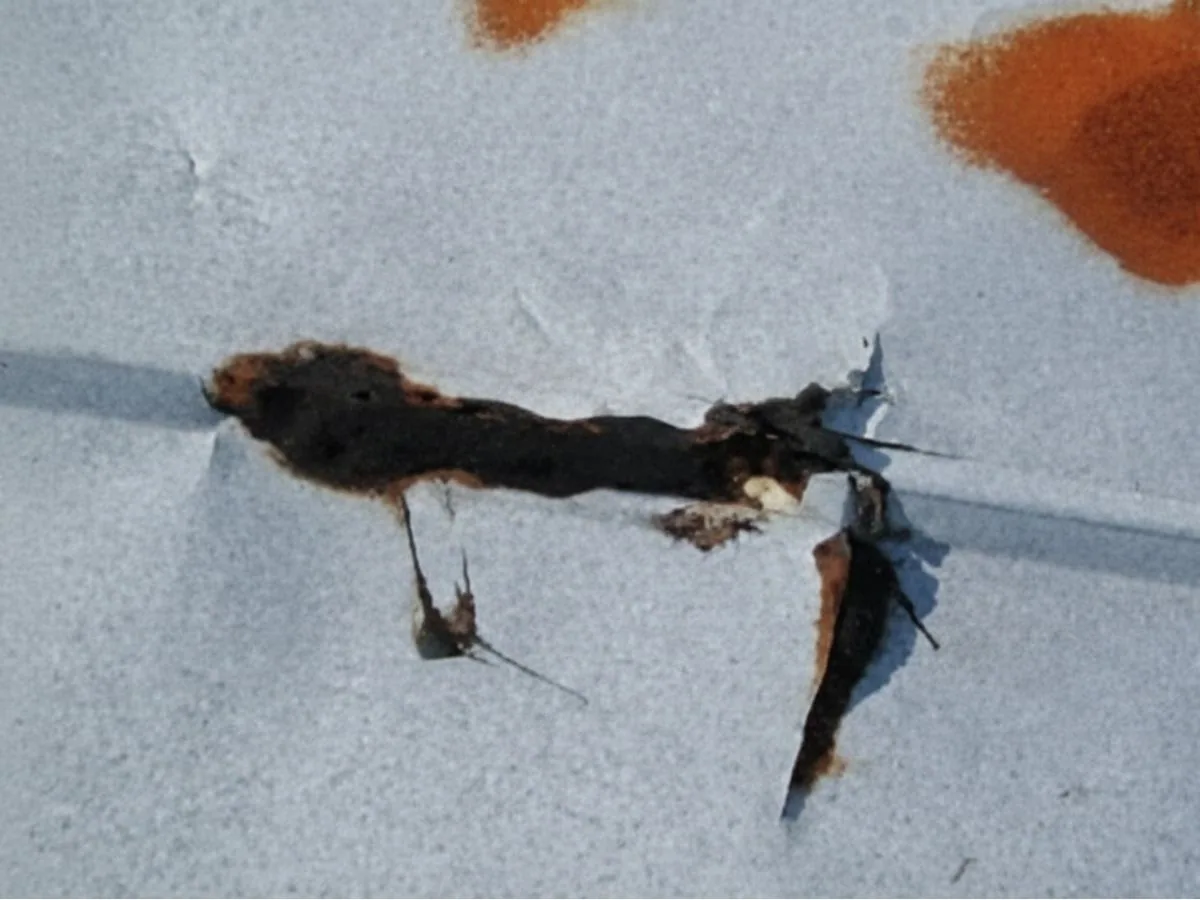
If a restoration assessment were requested at Gilbert Town Hall, 50 East Civic Center Drive, we would start by confirming which roof sections are involved and who controls access to them. The same applies at Southeast Regional Library, 775 North Greenfield Road. Where heat or falling debris has opened the membrane, membrane puncture repair may handle a specific spot, but the deck and insulation questions beneath it stay on the list until they are answered.
What can we inspect after a fire?
Before anyone climbs up, we need three things: the building, the roof sections affected and the person who can clear us for access. The fire department, an engineer or the restoration contractor may have closed off parts of the roof, and those limits come first. A roofer's walk is not a structural evaluation, and it does not clear electrical or gas service either. If part of the roof is off-limits, the report says so and marks it on the plan. A general request to look at the roof after the fire will not get anyone into the hidden layers by itself; that takes a decision to cut test openings in specific spots.
Our commercial roof inspection covers the membrane, seams, flashing, curbs and drains we can reach, and we note anything we could not get to. If the tenant or adjuster has a timeline of the fire, we keep it in the file with their name on it. A ceiling stain inside tells us where to start looking, not exactly where the water came in.
Old drawings and past repair photos help us find drains, curbs and earlier patches. They cannot tell us what last month's fire did to the insulation or deck, so we treat them as a map, not a verdict.
Get the fire-damaged roof inspected
Tell us which Gilbert building was affected and who can clear us for roof access. We will inspect what is safe to reach, explain the permanent repair we recommend, and list in writing what still needs an engineer or another trade.
Related Roofing Work
What is still unknown under the membrane?
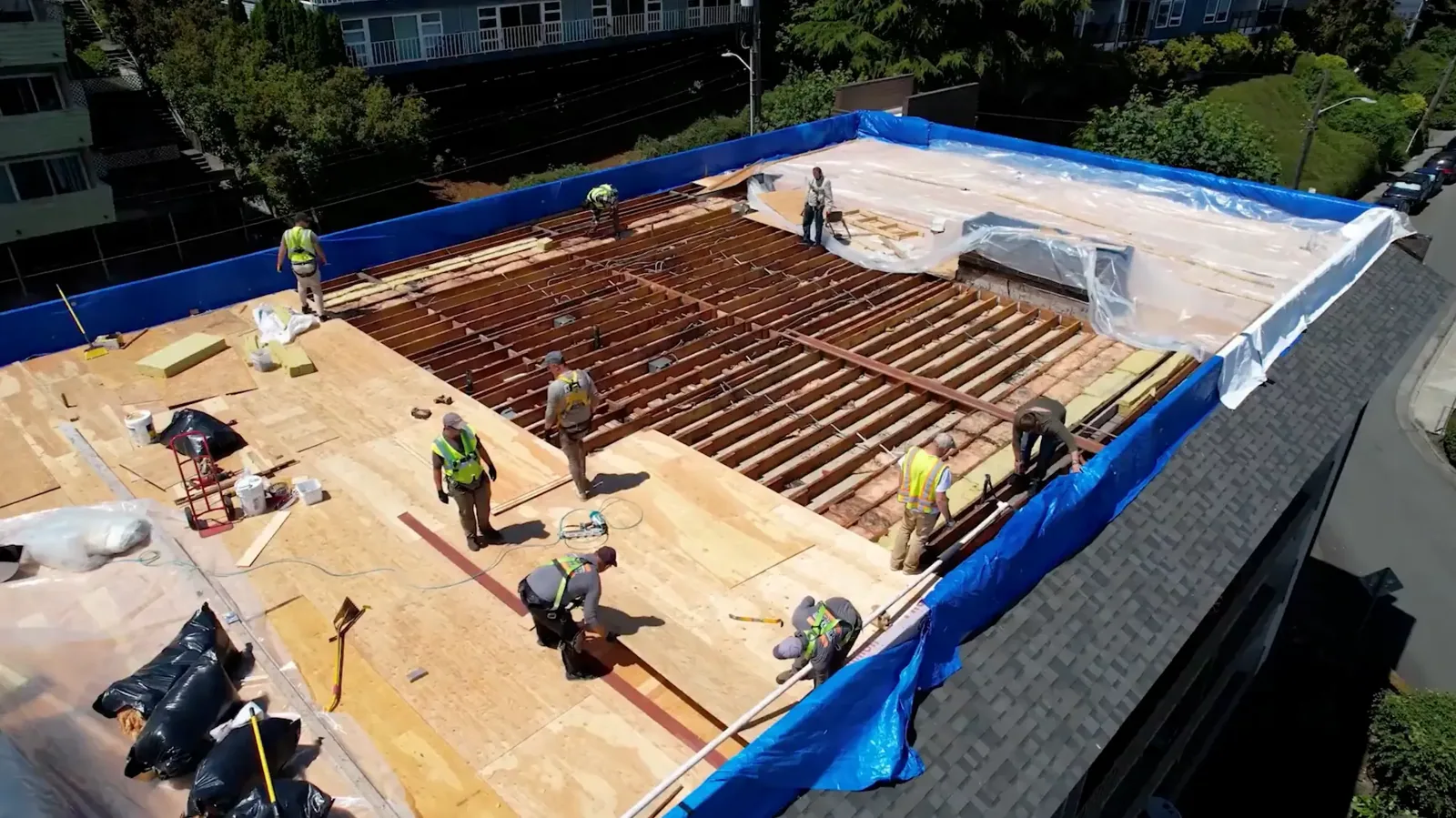
We break the damaged roof into zones the restoration team can find on a plan: membrane we inspected, spots we cut open to see the layers, and areas still waiting on an engineer or another trade. On a fire job those zones matter because the damage is rarely even. One bay can be blistered and spongy while the next looks normal. Before we recommend keeping any part of the existing roof, the report states what condition we are relying on and how we confirmed it.
Heat and hose water usually reach the insulation and cover board first. We note how far the wet or heat-damaged board runs, what has to come out and what goes back in. We do not assume the board beside a test cut is fine just because the membrane over it looks fine. If we recommend more cuts, we say where, what we are checking and how the result could change the tear-off area and the price.
We photograph every opening before it is closed and tag each photo to its spot on the plan. A shot of scorched membrane shows surface damage. It says nothing about the joists below, and our captions say so plainly.
What does the roof repair actually rebuild?
Gilbert roofs carry a mix of systems: TPO, PVC, modified bitumen, built-up and spray foam, sometimes several on one building after years of additions. We identify what is actually installed where the fire hit, because new membrane has to bond to the old. Two white sheets can look alike and still need different seam methods. If we cannot confirm the existing system at a detail, the report says so, along with what it would take to find out. What worked on another fire job does not decide what works on this one.
Our commercial roof repair estimate spells out what we tear off, what stays and how the new membrane ties into the old at each edge. If the tear-off uncovers burnt deck or charred wood blocking, we photograph it and price the extra work before we do it. A patch price does not automatically include new insulation or backing, so those appear as separate lines tied to the area they fix.
Where heat has pulled flashing loose at a parapet or curb, flashing failure repair is priced as its own item. Fixing one wall detail does not mean every reported leak has been found, and the estimate makes that clear.
What to Expect
Who handles the work around the roof?
Fire restoration involves a lot of trades, and the roof can only be closed once their parts are ready. Our scope lists the roof area, what we tear off, what stays and every permanent edge we build. It also lists what sits outside our work: framing repairs at the parapet, rooftop units that need to be pulled or reset, electrical disconnects and any deck replacement. For each one we say what condition the surface must be in before we tie in. An approved bid from another trade does not mean that work is finished and ready for us.
Before opening the roof, we walk the plan with the building manager and whoever is handling the interior and contents. We explain how much we will open at once, how long it stays open and how we close it each day. Monsoon season raises the stakes, since an afternoon storm can roll in over Gilbert fast. If the tear-off area grows, we go back over that plan before cutting more.
On a staged job, every open area gets a watertight temporary seal at the end of the day, and the next crew gets a clear note on what is left and who to call.
What happens when the tear-off finds more damage?
Sometimes the roof is worse under the membrane than the bid assumed: charred deck, melted insulation, fasteners that no longer hold. When that happens we stop, mark the area, photograph it and write up the extra work with a quantity and a price. If the deck or framing is involved, an engineer may need to weigh in first. The change goes through whatever approval process the owner and insurer have set up, and the opening stays protected while they decide. Permanent work picks back up once the deck is sound and the change is signed.
We keep what caused the fire separate from what we found on the roof. Our report covers the areas we inspected and the work we recommend. It does not decide the cause or settle the insurance claim. Reports from adjusters, engineers or fire investigators stay in the file under their own names.
For urgent problems we can come out on nights, weekends and holidays to tarp or seal an opening. Each temporary fix is noted by location and purpose. It keeps water out for now; it does not confirm the structure is sound or replace the permanent repair.
What should the closeout file include?
When the job is done, the closeout file should match the finished roof to the approved scope. That means a marked plan of repaired areas, photos of the deck and insulation before they were covered, and the products we installed. Approved change orders stay with the photos that justified them. Any temporary patch still in place, or work another trade has not finished, is listed separately so nobody mistakes new membrane for a finished restoration.
Each building in the McQueen-Elliot Industrial Area gets its own file, with outside reports kept under their authors' names. If a leak shows up later, we inspect the roof as it is then and compare it with the earlier repair record.
Questions Owners Ask
What can a roofer inspect after a fire?
The roof areas the owner, fire department and restoration team have cleared for access. We check the membrane, seams, flashing and drains there. Structural and utility questions go to an engineer or the right trade, and any area we could not reach is marked as not inspected.
Does a new roof prove the structure underneath is sound?
No. New membrane over a heat-damaged deck hides the problem rather than fixing it. We note what we checked below the surface and where an engineer still needs to look before any existing layers are kept.
How are repair quantities explained in the estimate?
Each tear-off and rebuild amount is tied to a specific area and layer: membrane, insulation, cover board, deck or flashing. Other trades' work is listed separately, along with any open question that could change the size of the repair.
Why keep outside reports under their authors' names?
Because each one answers a different question. The adjuster, engineer and fire investigator may reach different conclusions, and our roof report should not stretch any of them beyond what they actually say.
What should we get when the roof work is finished?
A marked roof plan, photos of the deck and insulation before they were covered, the products installed and any approved change orders. Temporary patches and unfinished work by other trades are listed separately.