
Roof Insulation and Cover Board in Gilbert, AZ
Home / Commercial Roofing Services / Roof Insulation and Cover Board
Which layers will remain beneath the new roofing, and what condition are they in? A Gilbert asset manager needs that answer before reviewing an insulation or cover-board price. New board material and correction of unsuitable retained construction are different tasks. We would assess the assigned assembly and develop the layer decisions alongside the permanent membrane work.
Start with available roof records and the reason the layers need attention. Locate the area affected by proposed repair or replacement. Review what can be inspected and which questions need another investigation. The proposal should identify retained insulation, material removal and the selected receiving surface for new roofing. A line for cover board does not settle every concealed condition beneath it.
How is the existing assembly identified?
We review available installation information and assess the relevant roof areas. Locate material changes and previous corrections. Identify the supporting deck and layer questions that affect the proposed work. Where the records do not establish the construction, define appropriate further investigation rather than select the new assembly around an assumed base.
A review of accessible roof construction should locate those unresolved questions. Surface findings help guide the next task without providing a direct view of every layer. We keep the observation and the material investigation distinct. The owner receives an explanation of what is known and which finding could change the proposed removal or retention.
For requested Gilbert Town Hall layer work, confirm the designated roof and available records with the representative. The property address is 50 East Civic Center Drive. We would assess the construction relevant to that assignment and develop the insulation and supporting-board scope from those findings.
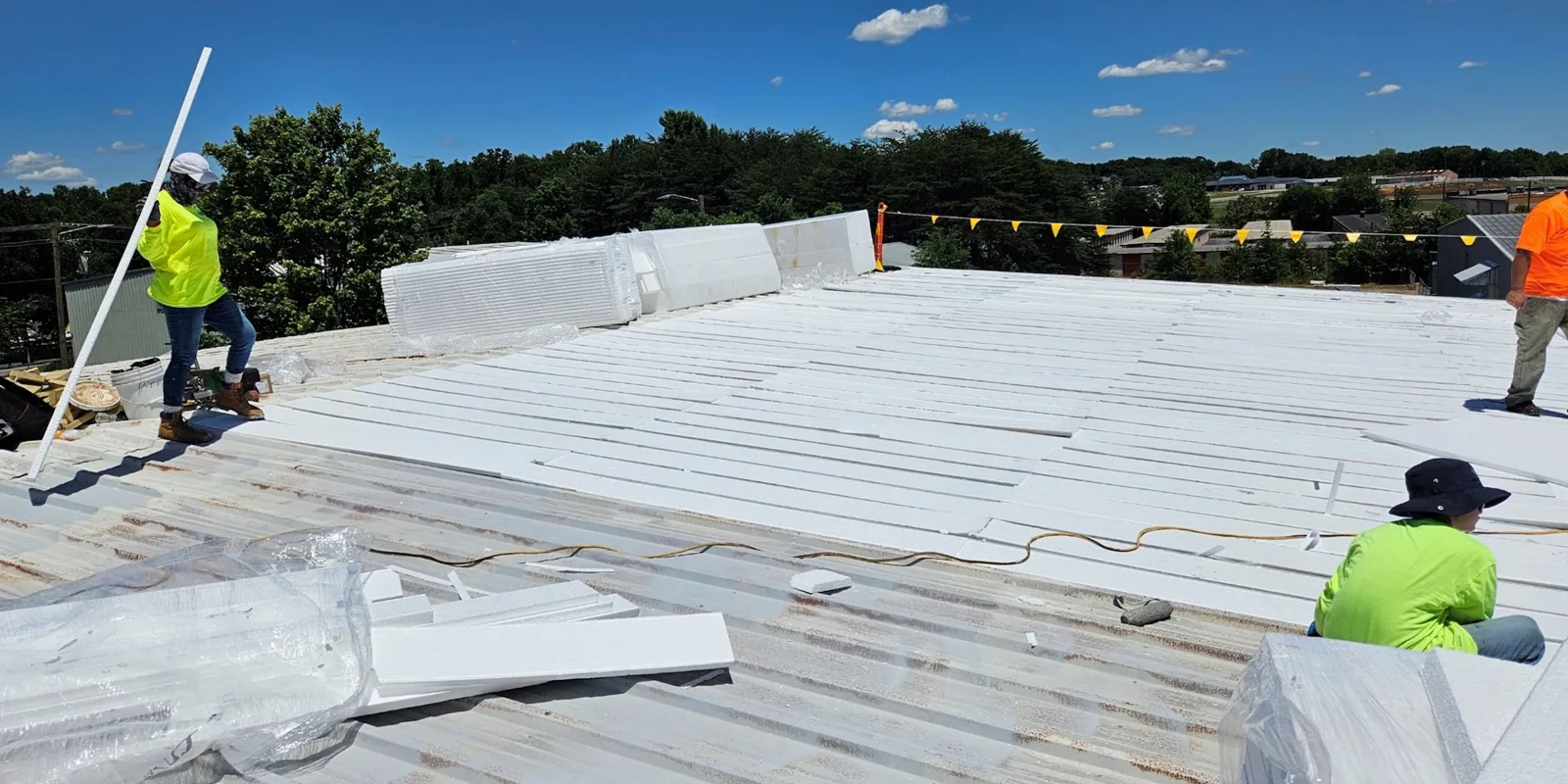
Identify the layers beneath the roofing price
Review the existing assembly and planned work with us. We will explain retained materials, supporting correction and the selected insulation and cover-board scope.
Related Roofing Work
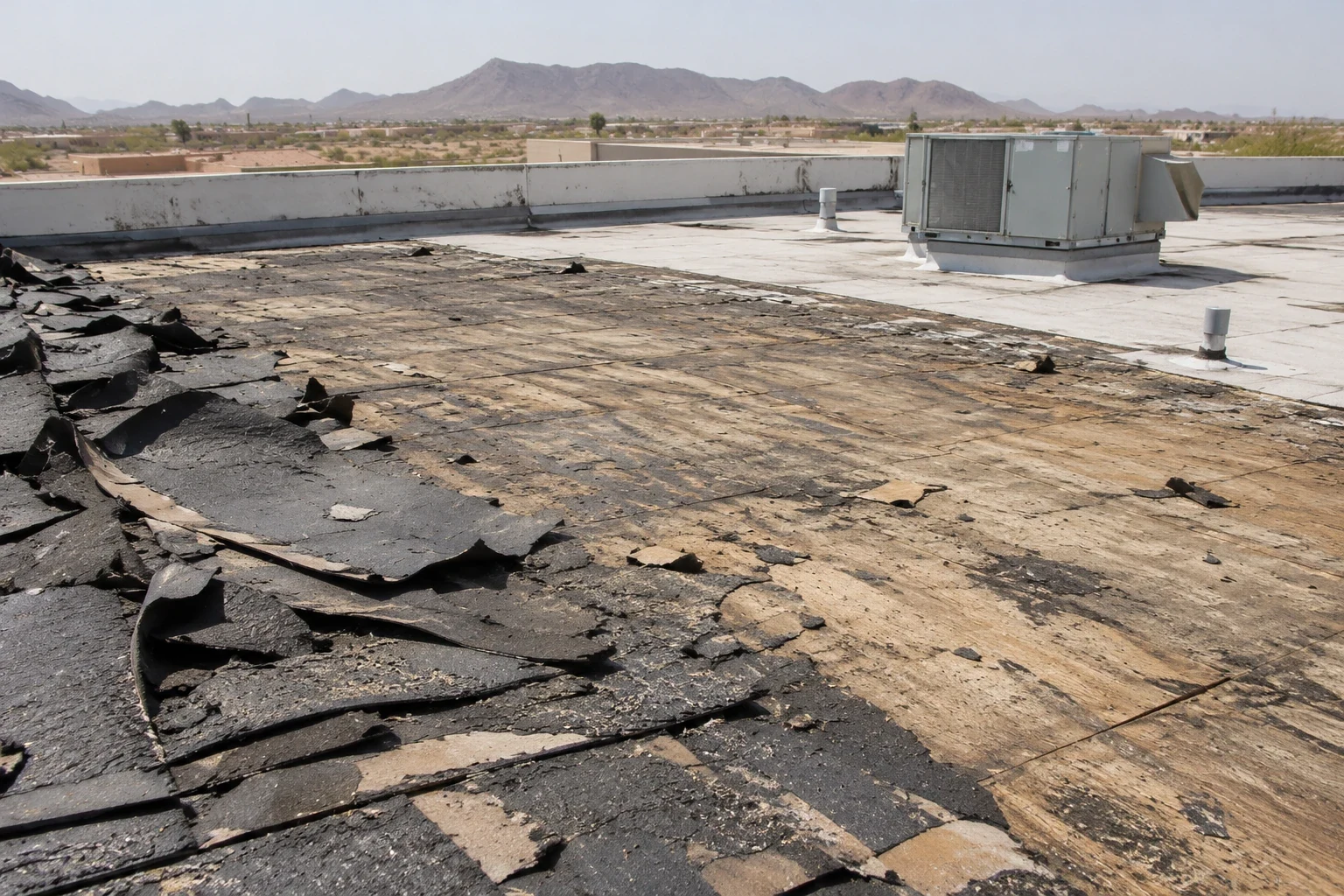
Which material findings change retention?
Review the existing layers where they affect the new connection or assembly. Locate unsuitable material and define the required correction. A retained-layer decision needs its assessed construction basis. The owner should understand why an area remains, why another is removed and where further investigation still affects the recommendation.
An interpreted moisture assessment can help guide material investigation where appropriate to the roof. Review the thermal findings with confirmation where necessary. Keep the actual layer finding beside the proposed work boundary. A temperature pattern should not be presented as an exact removal quantity without the supporting assessment.
Where exposure reveals another condition, document the affected layer and roof position. Develop the changed correction before closing the assembly. We preserve that finding with the revised quantity so the asset manager can review why the scope changed. The new roofing should not conceal unsuitable retained material under an unchanged allowance.
What will support the selected membrane?
Develop the receiving surface for the particular new roofing product. Identify the selected insulation and cover board, together with the supporting construction and attachment. Keep each layer's role clear in the proposal. Adding a board does not remove the need to establish how the whole chosen assembly connects to the deck.
Johns Manville's published assembly references distinguish insulation attachment, cover-board attachment and membrane attachment. They include different combinations for steel and concrete decks. Those categories show why a proposal needs the actual layer and deck arrangement selected. We would review the applicable construction with the responsible design parties where needed, rather than treat one board as a complete assembly decision.
Where a TPO assembly is developed, keep its particular product and supporting-layer decisions together. Identify the materials receiving attachment or adhesion and the required preparation. A similar membrane summary can hide different underlying work. The owner should see those differences through the selected construction specified for the project.
At the boundary of local removal, review how the replaced material meets the layers that remain. Locate differences in thickness and the surface receiving the new roofing. We develop that transition with the selected assembly rather than leave it inside a broad insulation quantity. The crew should have the receiving construction and required correction available together before completing the permanent membrane.
What to Expect
How do new layers affect nearby details?
Review the proposed finished level beside curbs, walls and drainage openings. Changes in underlying layers can alter those relationships. Measure the affected positions and develop the permanent transitions. The field assembly and the component connections need to agree before the new roofing is installed.
A review of changed roof-level relationships should identify the actual construction question. Develop any required assessment or responsible design task. We would locate the selected layer arrangement and adjoining drainage details rather than imply that new insulation automatically corrects every reported low area.
For requested Southeast Regional Library work, establish the roof area and relevant component records through the representative. Its location is 775 North Greenfield Road. We would review the new assembly level against the existing details there, with preceding component correction identified alongside the insulation and board selection.
What should remain in the construction record?
Record the retained-layer decisions and the new materials installed at identified roof areas. Preserve useful exposure photographs and backing findings. Locate changes from the original proposal. The asset manager should be able to understand which construction was removed or corrected before the completed membrane covered it.
For Williams Field Road Commercial Area, establish the particular building and assignment through the representative. Review the existing assembly and planned permanent work at that area. We would develop retention, removal and supporting correction there, keeping any wider material recommendation attached to its own assessed construction.
A record of the exposed layer findings should preserve the reason for changed quantities. Identify the deck or supporting material question that prompted additional work. The crew needs the revised assembly information before proceeding, and the owner needs the same change explained through the actual roof position.
Keep the product identification and installed layer arrangement useful for later repairs. Another crew should know the supporting construction selected beneath the current membrane. Where information remains unresolved beyond the completed scope, locate the further task separately. A later proposal can begin with that record, then verify current conditions rather than assume an earlier retained-layer decision applies unchanged to every new project.
Insulation and cover board form part of the assembly beneath the visible membrane, so their condition affects both the repair and the new surface detail. Check whether the existing boards are dry, firmly attached and compatible with the proposed attachment pattern before laying over them. At slopes and transitions, compare the finished levels with drain rings, equipment curbs and perimeter metal. If the substrate changes in an opened area, record the exposed layers and adjust the repair boundary to restore a supported, continuous assembly.
Questions Owners Ask
What should a Gilbert insulation proposal identify?
State retained layers, material removal and new supporting products. Connect those decisions with the assessed assembly and the membrane work proposed above it.
Can a cover-board line settle concealed material condition?
The supporting construction still needs appropriate review. Locate investigation and required correction before treating retained layers as suitable for the selected work.
Why separate insulation and membrane attachment decisions?
The chosen assembly includes different layer connections to its deck and receiving surfaces. Develop the actual arrangement rather than assume one product settles the whole construction.
How can added layers affect curbs and drainage?
Finished roof levels change their relationship to nearby components. Measure affected positions and coordinate the permanent transitions before installation.
What should an owner keep after underlying work is covered?
Preserve exposed findings, installed layer identification and roof positions. Record changed quantities and distinguish further material investigation from completed correction.