
Senior Living Roofing in Gilbert, AZ
Home / Property Types We Roof / Senior Living Roofing
A roof warranty nearing its end date is a good reason to look at a senior living roof in Gilbert, AZ, but it does not tell you what work to approve. That answer comes from the roof itself. We compare the drawings and repair history you have with what we find on top: membrane condition, seams, flashing, drains and any soft or wet areas. Then we explain the repair we recommend and what else would need checking before deciding whether to keep or tear off the existing roof. Because residents live below the work, the plan for hallways, dining rooms and air intakes sits right next to the roofing scope.
Savanna House is listed at 1415 North San Benito Drive in Gilbert, and Sky Ridge at 1445 East Willis Road. For a roof concern at a community like these, tell us which building and where the problem shows up. Our Higley-area roofing crews schedule the visit through the facility's director or maintenance lead. Old roof drawings, product records and past repair invoices all help, and staff tell us the entry and check-in rules.
What can the old roof records tell us?
Start with whatever paperwork the facility has: the original roof system, past repair locations and any product sheets. We line up the reported leak or problem spot with those records. A repair invoice may show where layers were added or where a curb was reflashed, which saves time on the roof. But records age, and Arizona sun keeps working on the membrane after the paperwork is filed. We inspect the roof as it is today before recommending the next repair, and the report notes what we could confirm and what still needs a closer look. If the records raise a question only the original installer or manufacturer can answer, we say who to ask.
During a roof inspection, we note each detail we checked and why any further testing is needed. A membrane can look fine while the insulation below is wet. If we recommend a test cut, we explain where it goes, how it gets sealed and what it tells us about the layers. If the extent of the damage is still unclear afterward, we say what the next step would be. That way the facility approves investigation and permanent work as separate, clearly priced items instead of one large number with no explanation behind it.
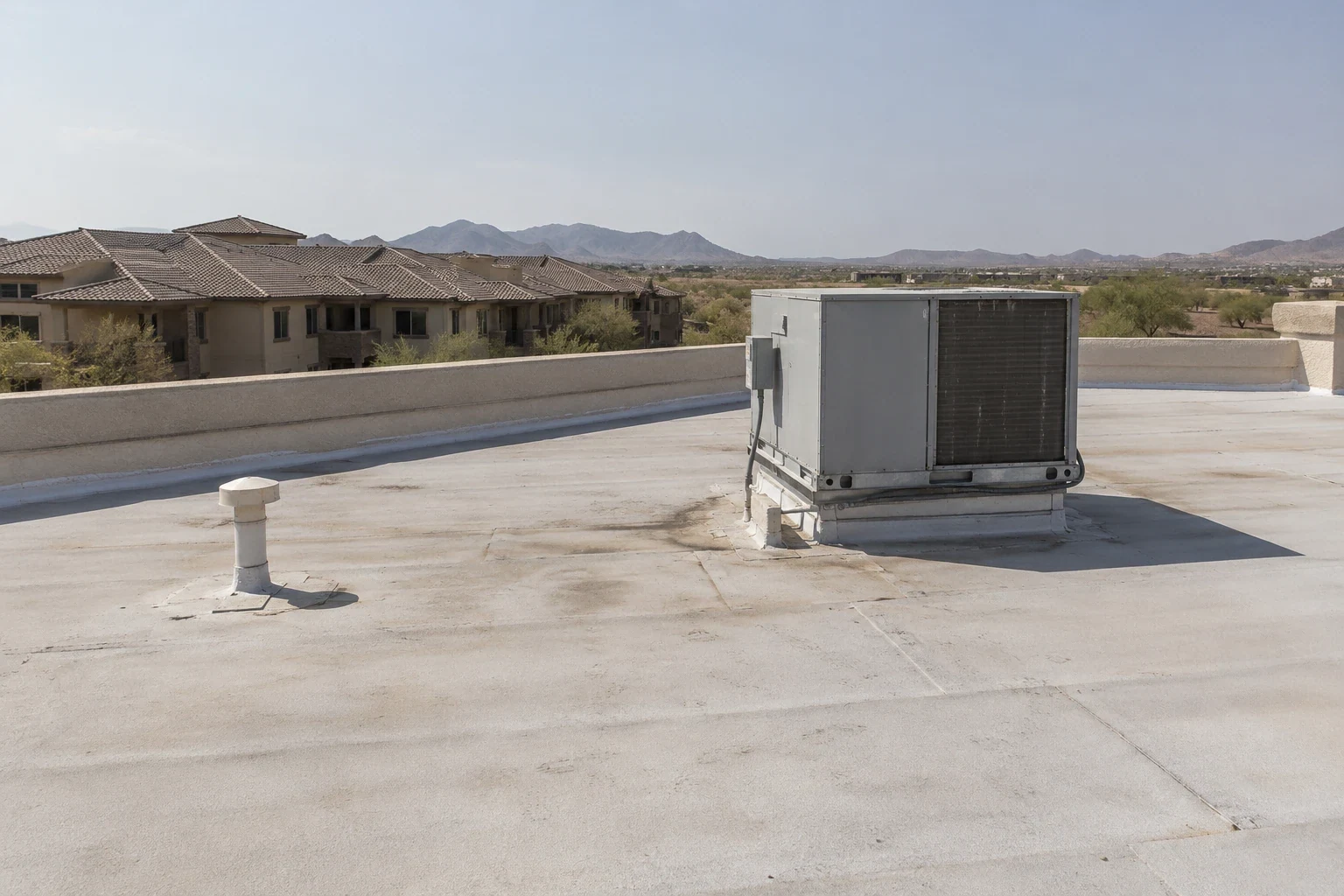
Have your senior living roof inspected
Tell us where the problem shows up and who on staff we should coordinate with. We will compare your roof records with what we find on top, then explain the repair options and the resident protection plan for each stage.
Related Roofing Work
Is the leak really coming from the roof?
A wet ceiling tile in a resident room does not always sit under the leak. Water can run along the deck or insulation and drip several feet away. We check the seams, pipe penetrations, curbs and wall flashing above and around the stain. If the water turns out to come from a condensate line, a plumbing vent or an HVAC unit, we bring in that trade instead of patching a roof that is not leaking. When we do find a roof defect, we explain the repair that fixes it, and any other stain we could not trace gets its own note and next step.
For leak repair, we check the membrane and insulation around the repair spot first. Wet insulation or rotted wood backing changes how much has to come out. At a parapet, new flashing needs solid backing and a proper termination at the top. If a wall repair by another contractor has to happen first, we list it next to our price. If the repair opens up a larger damaged area, we mark it, photograph it and price the extra work before going further.
How do we protect residents during the work?
Before any tear-off, we walk the work area with the facility contact and map the rooms, hallways and outdoor spaces below it. Staff give us their rules on dust, air intakes, infection control and interior access. Roofing adhesives and torch work can carry odor into the building through rooftop units, and tear-off is noisy, so we talk through timing for each section. Staff decide whether residents need to move from a room or activity area and who arranges that. Every protection step has a name next to it, and we agree on all of it before setting a start date.
For reroofing over occupied spaces, we spell out how much roof we open each day and how we seal the edges overnight. Material deliveries and debris chutes often sit outside the work area, near entrances or parking, so we review routes with the facility. If the tear-off area has to grow, the arrangements below may change too, and we cover that with the revised price. A change in method, such as switching from a torch-applied system to a cold adhesive, gets reviewed with staff as well. Each stage stays tied to a specific roof area and the staff contact for it.
What to Expect
How should repair, recover and replacement compare?
A spot repair works when the problem is clearly located and the roof around it is in good shape. Wider wear needs a closer inspection before choosing a bigger fix. A coating only works on a sound, clean surface, with the damaged details repaired first. A recover needs dry insulation and an existing roof that meets the system requirements. For roof replacement, the estimate lists what comes off and what goes on: insulation, membrane, fastening and edge details. We explain how the inspection supports that option and what could still change the quantity.
If you are comparing TPO roofing bids, check that each one includes insulation, cover board and every curb and wall detail, not just the sheet. Disposal, crane time and other trades can move the price. An apartment roof runs on a property manager's tenant notices, and a hospital roof follows the hospital's own rules. A senior living job has its own staff plan, and that plan belongs in every option you compare.
What else belongs in the scope and closeout?
Rooftop HVAC is common on these buildings. At equipment curbs and supports, the mechanical contractor handles shutting units down and resetting them. If a support has to be changed and that needs an engineer, the scope says so before work is committed. We make sure the curb or stand is solid before we flash it. We also check the drains and scuppers near the work. A drain might just need debris cleared, its flashing rebuilt, or the pipe below checked by a plumber. Any plumbing or engineering task the roof depends on is listed with the contractor responsible, so the facility can see who has to finish what before the roof can be closed.
We plan the temporary seal for each open area before tear-off begins. Details waiting on another trade stay watertight until we can finish them. At closeout, the facility gets photos of repaired details and patched test cuts, plus the product information, agreed quantities and sign-offs from other trades. We also note any maintenance completed and any follow-up we recommend. For urgent leaks, we answer calls on holidays, weekends and overnight. With staff letting us in, we can stop the water and set up the inspection for a permanent fix.
Senior living work depends on steady communication with the facility contact about resident movement, common rooms and spaces that must stay open. We match each roof zone to the rooms below it, flag equipment or penetrations that need another trade and confirm the protection plan for each phase. Staff get notice ahead of each phase and a clear time when a room or hallway goes back to normal use. The closeout lists repaired locations and any open items. Resident care and daily routines stay with staff; the roofing crew works around them.
Questions Owners Ask
Do old roof records replace a roof inspection?
No. Drawings and repair history tell us where to look, but we still inspect the roof as it is today. Any hidden layer that needs testing is noted, and the repair we recommend is based on what we actually find.
What should the facility arrange before a roof is opened?
A map of the rooms and hallways below the work, the facility's rules on dust, air intakes, infection control and access, and a staff contact for each protection step. We agree on all of it before setting the start date.
How should a larger repair quantity be reviewed?
With photos and a marked plan of the damage we found, the extra layers that have to come out, and any change to the rooms affected below. The revised price comes with that evidence so the facility can approve it.
What should the closeout package include?
Photos of repaired details and sealed test cuts, product information, the agreed quantities and any work still owed by other trades. Those records make it easier to plan the next maintenance visit or follow-up inspection.