
Solar-Ready Roofing in Gilbert, AZ
Home / Commercial Roofing Services / Solar-Ready Roofing
Will the roof work be finished before the equipment layout becomes final? That question matters when a Gilbert owner plans solar and roofing together. A roofing proposal needs the actual equipment interfaces, while the equipment team needs the roof construction that will remain beneath its work. We would bring those decisions into one coordinated review before permanent details are installed.
Begin with the assigned roof, existing material information and proposed equipment arrangement. Identify which drawings are current and which decisions remain open. Review the roof condition separately from the solar proposal. The asset manager should understand the roofing correction needed now, the interfaces requiring another party's design and the information still required to prepare a useful construction scope.
Is the current roof suitable for the proposed sequence?
Inspect the roofing before treating it as the finished surface beneath new equipment. Locate damaged seams, deteriorated details and reported leaks. Review prior repairs and supporting layers where the findings require investigation. Existing material records can help identify a membrane; they do not replace assessment of its present condition or every patch encountered on the roof.
Our condition review before equipment work should describe accessible findings and areas needing further examination. Connect each recommendation with its roof position. An owner deciding between correction and replacement needs to see the construction issue behind that recommendation, especially where the proposed equipment would affect later access to the same area.
A planned reroof before the solar installation needs a developed new assembly. Establish the removal and retained-layer decisions, then resolve its details with the equipment arrangement. We would explain how an unresolved roof condition affects the proposed sequence rather than leave the equipment team to discover the roofing correction during installation.
For solar-related roof planning requested at Gilbert Town Hall, first identify the building and roof assignment through the representative. Record its address as 50 East Civic Center Drive in that project reference. We would inspect the assigned construction and review the proposed interfaces there before determining the roofing work to include.

Review the roof before finalizing solar interfaces
Bring the roof records and current equipment layout. We will explain the roofing concerns and develop a preparation scope with clear construction responsibilities.
Related Roofing Work
Who develops the attachment and supporting construction?
Separate equipment support from the membrane connection around it. The responsible equipment and design parties need to develop their supporting arrangement. Our roofing scope then identifies the permanent membrane detail at the resulting interface. A drawing that shows an equipment position still needs the final dimensions and supporting construction required to make that connection buildable.
Review whether the proposal introduces penetrations, curbs or another interface with the roof. Obtain the actual detail rather than assume that every solar layout creates the same roofing task. Where supporting work is required, assign it to its responsible party and establish when the finished component will be ready for membrane preparation.
A flashing detail at a new interface depends on the selected membrane and final component. We would review the supporting face, material transitions and attachment requirements for that detail. Confirm how the roof connection will be protected while another crew completes its work. The proposal should identify those relationships instead of leaving them as an unexplained general coordination allowance.
Keep revised component dimensions with the current roofing detail. If a layout changes after the proposal, examine what changed at the roof interface and adjust the affected work. An earlier detail should not become the crew's permanent instruction when the supporting component or its position has been revised.
What remains reachable after the equipment is installed?
Review the intended arrangement beside drains, roof edges and equipment already present. Locate the roofing areas that will need inspection or maintenance after installation. Discuss access requirements with the responsible parties while the layout can still be considered. We would identify roof-work concerns at those positions and develop the correction or detail needed before the new equipment obstructs the task.
Drainage review should include the actual opening and nearby construction. Keep a drainage concern requiring investigation in the roofing scope rather than assuming the new layout resolves it. Locate any proposed change beside the drain and assign its design or component work. The finished roofing connection must follow that developed condition.
At Southeast Regional Library, a requested planning review should identify the particular roof with its representative before layout decisions are applied. Use the library address, 775 North Greenfield Road, to identify that work reference. We would examine the proposed relationship to accessible roofing and drainage there, then describe the roof preparation that follows those findings.
What to Expect
Which roof materials and repairs need agreement?
Name the existing membrane and proposed roofing products where they are established. Review patches and earlier coating work at affected locations. The equipment installation should not leave a later roofer guessing which material is present around a support. We would develop compatible permanent details for the selected construction and identify any preparation needed before another crew works beside them.
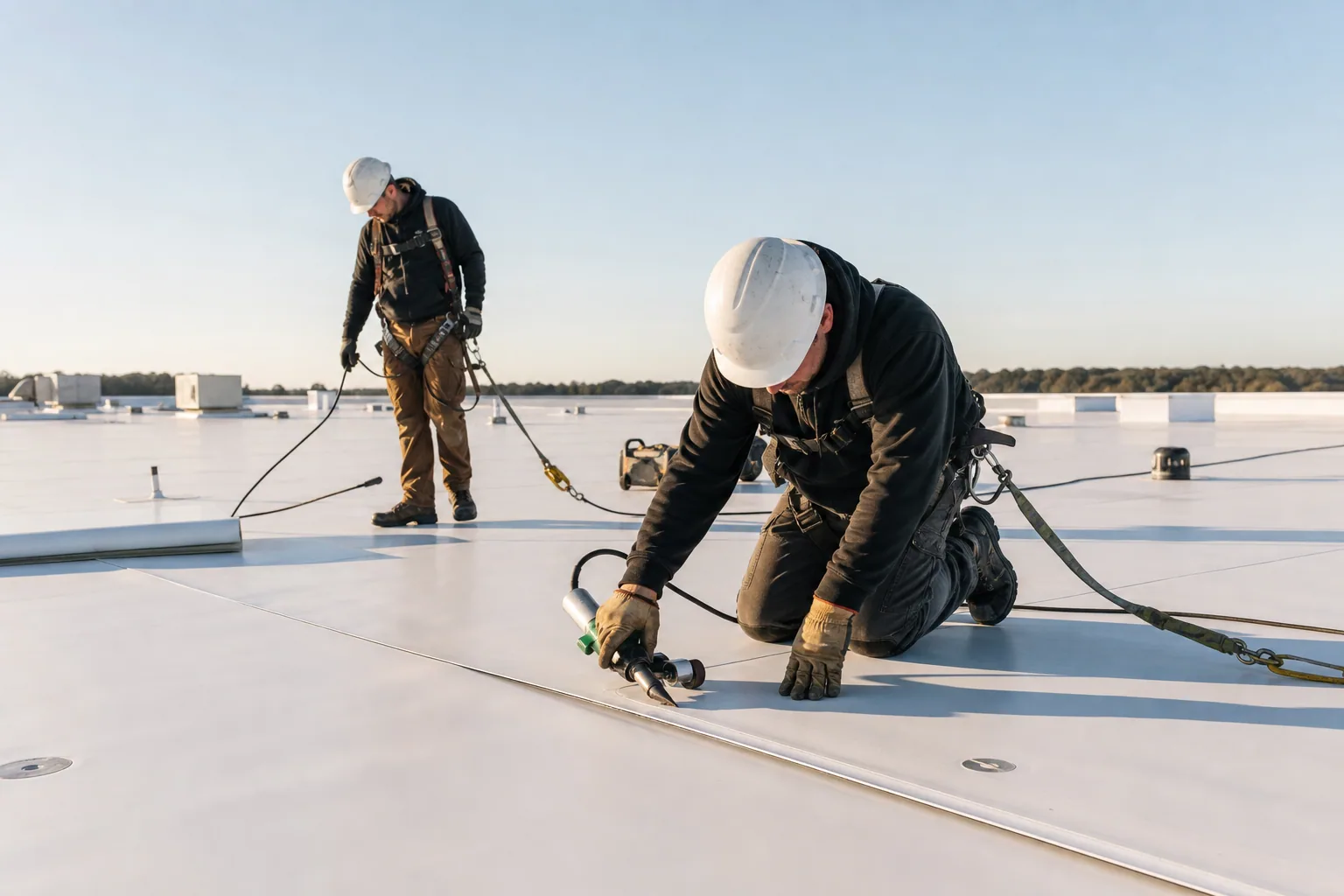
Where the roof uses a specified TPO assembly, review the particular material and detail requirements. Another membrane needs its own directions. Do not substitute a generic sealant description for a developed connection to the roof. Include backing correction and component work separately when they are necessary for that connection.
Locate pre-existing damage and completed correction in the project record. Keep useful photographs with roof positions and material notes. If another trade changes an installed detail, identify the affected location for roofing review. The owner benefits from a clear record of construction before and after the equipment work rather than an uncertain account of when a defect appeared.
How should the owner compare the proposed scope?
A useful scope separates roofing preparation, equipment interfaces and unresolved design tasks. Show what we will inspect, repair or install at the roof. Identify work assigned to other parties and the information needed before our permanent details can proceed. The owner can then compare proposals by construction responsibility as well as price.
For Williams Field Road Commercial Area, confirm the specific property and proposed project through its representative. We would review the roof assignment, current construction and supplied layout together. Develop roofing recommendations for that examined area, with interface dimensions and supporting work carried forward into the proposal.
Keep the final roofing instructions aligned with the approved equipment information supplied for the project. Record installed details and corrections where the work changes construction. A later maintenance visit should be able to identify the membrane, affected roof positions and equipment interfaces without reconstructing the entire project from an old preliminary layout.
Roof readiness for future solar begins with a documented roof condition and a clear attachment concept. Coordinate likely support locations, membrane penetrations, drainage paths and service clearances before finalizing roof details. The building owner should obtain structural review from the responsible design professional, while the roofer describes the roof assembly and approved penetration approach. If the solar layout changes, revisit those details before installation so new supports do not interfere with drains, seams or warranty requirements supplied for the selected system.
Questions Owners Ask
What comes first in Gilbert solar-ready roofing planning?
Review the existing roof and the proposed equipment arrangement together. Identify condition concerns and unresolved interfaces before developing permanent roofing details.
Who determines the equipment support design?
Responsible equipment and design parties develop that arrangement. Our roofing scope addresses the membrane connection to the resulting component and any preceding roof correction.
Should drainage be reviewed with the solar layout?
Locate openings and nearby proposed construction. Investigate existing concerns and coordinate affected component work before finishing the roofing connection.
Why name the membrane around a solar interface?
Material identification helps develop the particular preparation and permanent detail. Review old patches and coatings where they affect the selected connection.
What roofing records should remain after solar installation?
Preserve roof positions, installed materials and completed interface details. Keep revised equipment information with those records so later work follows the finished construction.