
Cool Roof Installation in Gilbert, AZ
Home / Commercial Roofing Services / Cool Roof Installation
What does the reflective surface change, and what roof work still needs to be developed? A Gilbert asset manager should understand both before choosing a cool-roof proposal. Surface properties are one material decision. Retained construction, attachment and permanent details remain part of the installation. We would review the assigned roof and connect the product choice with its actual assembly.
Start with the existing roofing and the reason new material is being considered. Review product records, reported concerns and earlier corrections. Establish whether the proposal is a new membrane assembly or restoration of a retained surface. The owner needs the construction scope behind the reflective option rather than a surface description that leaves backing and component work undefined.
Which surface properties are being selected?
ENERGY STAR distinguishes solar reflectance from thermal emittance. Reflectance concerns sunlight reflected away; emittance concerns release of heat. Those are useful properties to review for the particular proposed material. The roofing selection should name that product rather than rely on color alone or turn a general cool-roof description into a promised result for the building.
A selected TPO membrane assembly should have its actual product and supporting arrangement developed. A reflective finish does not settle the connection at a wall or curb. We would identify the permanent detail and preparation alongside the field-sheet choice. The asset manager can then assess the proposal as roofing construction rather than only a surface comparison.
Where the owner requests another product, compare its developed assembly and details. Identify the particular material properties and construction differences being considered. Keep any building-specific performance review with its responsible parties. A general description of reflective roofing should not be presented as a measured outcome for an unassessed property.
Compare two proposed products against the same roof assignment. We would check which preparation, attachment and flashing each option requires, then identify the work that changes between them. If one proposal retains existing roofing and another removes it, show that difference in the construction scope. A surface-property comparison becomes useful when the owner can also see the materials beneath it and the component work needed to install each option.
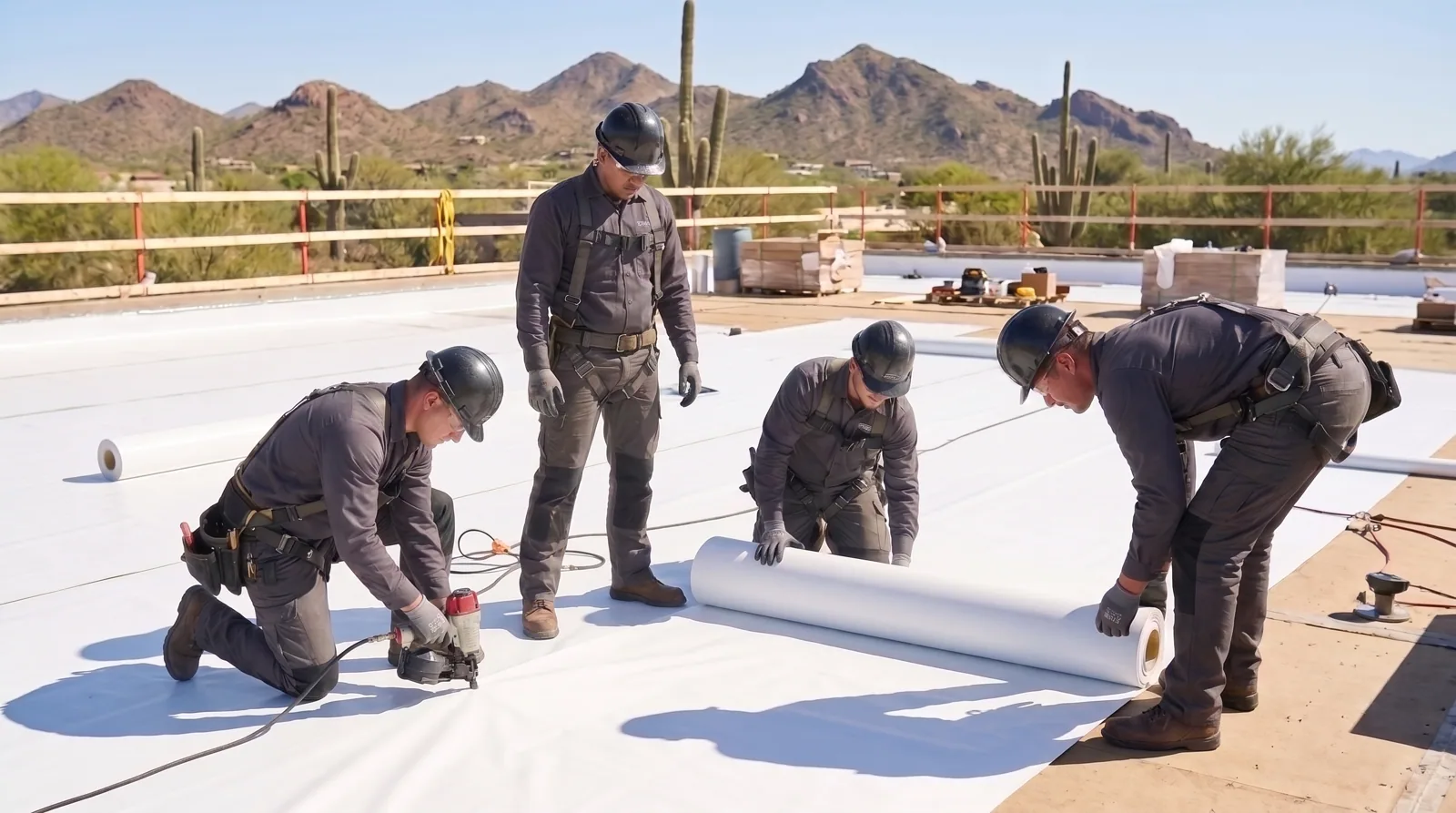
Review the construction behind the reflective choice
Bring the roof assignment and proposed material to the review. We will explain the supporting work and develop the cool-roof option as a complete construction scope.
Related Roofing Work
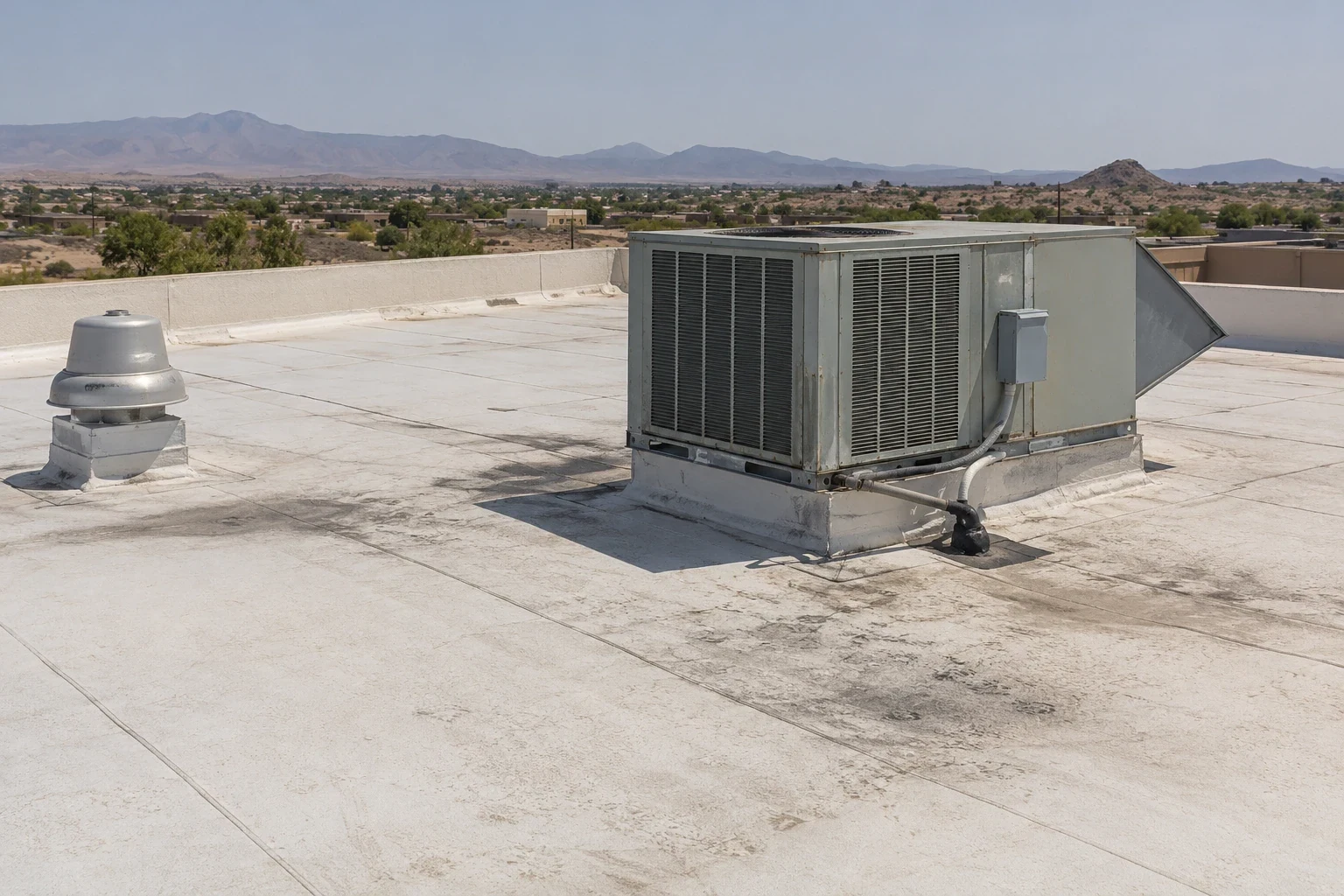
Does the existing roof stay or come off?
The material condition determines what supporting work needs assessment. We review the existing layers and locate unsuitable retained construction. Define the removal or further investigation required. The proposed cool-roof surface should sit within an assembly whose support and connection are established for that roof.
A replacement option with defined removal should identify the new materials and preceding correction. A retained-roof alternative needs its own material assessment. We develop the construction decisions separately so the owner understands why the options differ beyond the finished color.
For requested Gilbert Town Hall cool-roof planning, obtain the roof assignment and available records through the representative. Use 50 East Civic Center Drive as the building address in that work reference. We would review the existing construction there before developing retained layers or removal and the selected reflective material.
When is coating a separately developed option?
Coating retained roofing requires a particular surface and product assessment. Identify previous coatings, old patches and damaged details. Develop preceding repairs and preparation. A reflective coating choice should not be described as a substitute for every membrane defect or concealed-layer concern discovered during the review.
The restoration preparation and repair scope should locate those decisions before application. Keep adhesion assessment and applicable material treatment with the selected coating. We would connect the chosen product with its actual receiving surface. Another roof area with different retained material may require its own preparation decision.
Where a silicone coating is considered, review its specific directions and permanent detail requirements. A membrane replacement and a coating project are different construction proposals. The owner should be able to compare their retained material, preceding corrections and finished connections rather than assume the reflective surface makes their underlying work equivalent.
What to Expect
How does the new construction meet components?
Review the finished assembly beside drainage openings, walls and equipment. Locate changed levels and final component dimensions where they affect the roofing detail. Develop the selected connection at each position. A field material choice needs those transitions resolved before the crew installs the permanent roof.
A developed flashing correction should identify the supporting face and retained sheet at its boundary. Locate component work that precedes it. Where a curb or wall changes, preserve the current geometry and selected material arrangement. The new connection should fit that final construction rather than an earlier condition shown in a superseded proposal.
For a cool-roof review requested at Southeast Regional Library, confirm the particular roof area with its representative. Its work reference should name 775 North Greenfield Road. We would assess the actual component relationships and develop the selected permanent roofing there, with any supporting correction identified beside the material choice.
What should the owner receive with the selection?
The proposal should identify the selected product, the underlying assembly and the permanent details. Keep required preparation and preceding repair visible. Explain retained-material findings and unresolved questions needing another task. The asset manager should understand what construction is being installed as well as the surface property behind the cool-roof choice.
For Williams Field Road Commercial Area, establish the assigned building and roof through the representative. Review current construction and available material information. We would develop the reflective option for that assignment, with backing and component decisions based on the findings at the roof actually examined.
Preserve useful exposure and preparation records where the project changes construction. Locate installed material and completed details at their roof positions. Distinguish recommendations elsewhere from the finished work. A later crew needs to know the actual product and assembly beneath the current surface, rather than infer them from a roof photograph.
Keep any further building-specific review and supplied product documents with the owner's project information. We would explain the roofing decisions that are established and the tasks remaining with their responsible parties. The final account should support maintenance and later assessment by identifying the installed construction, material selection and current roof designation together.
A reflective roof surface is only one part of a cool-roof decision. Review the existing assembly, insulation condition, drainage and attachment before choosing a coating or replacement system, and confirm that the specified product suits the substrate. Record how seams, penetrations and roof edges will be prepared and finished. A proposed temperature or utility benefit depends on the building, system and operating conditions, so the scope should describe the selected construction and avoid treating reflectance alone as proof of a defined energy saving. A property-specific operating review may be needed to assess expected performance.
Questions Owners Ask
What should a Gilbert cool-roof proposal identify?
Name the particular reflective product and develop the supporting assembly. Include retained-layer decisions, preceding repairs and permanent details beside the surface choice.
How do reflectance and emittance differ?
ENERGY STAR describes reflectance as sunlight reflected away and emittance as heat released. Review both for the material being considered rather than rely on color alone.
Does choosing a reflective coating replace roof assessment?
Retained surface and layer conditions still need review. Develop preparation, adhesion and damaged-detail correction for the selected product before application.
Why assess components when selecting a cool-roof assembly?
Finished levels and final dimensions affect the permanent connection. Coordinate the field material with wall, curb and drainage details.
What should remain in the property record after installation?
Keep the installed product and assembly with roof positions and useful correction records. Identify additional review tasks separately from the completed roofing.