
Government Building Roofing in Gilbert, AZ
Home / Property Types We Roof / Government Building Roofing
When a public agency in Gilbert, AZ pays for roof work, someone will eventually ask what the money bought. A useful project file answers that. It ties what the inspection found to the work approved, the details installed and whatever still needs doing. We start where the leak or complaint is and inspect the roof areas we can reach. The estimate explains the repair those findings support and the prep work around it. That gives the facility manager something solid to review the work against and plan future maintenance from. A membrane brand and a square footage leave too much unexplained.
For a government building near Gilbert Town Hall or Southeast Regional Library, tell us the actual building and which department's space is affected. Send any roof drawings, past repair invoices and staff notes on where water showed up. A Gilbert Heritage District visit follows the agency's access rules, including any escort or sign-in. The facility contact tells us what applies on site. With that, we can say what the inspection needs to answer and plan the visit around it.
What should the first report pin down?
We compare the staff report with the roof directly above and around it. Water that drips onto one ceiling tile may have entered several feet away at a seam, a pipe boot or a wall flashing. Each of those is a different repair. If the source looks like a condensate line or a plumbing leak, that goes to the right trade. The report says which roof problem we found and which question still needs another look, with the location and next step for each. That way the agency approves specific work instead of one lump sum stretched over unrelated leaks.
A commercial roof inspection notes what we were able to check and where more testing is needed. Wet insulation or a rusted deck can decide whether existing roof stays. If we recommend a test cut, the report gives its location and how it will be patched. The result tells you about that spot. A wider area may need more cores before its size is known. The report keeps that line clear, so the repair quantity follows findings and does not guess at how far the damage runs.
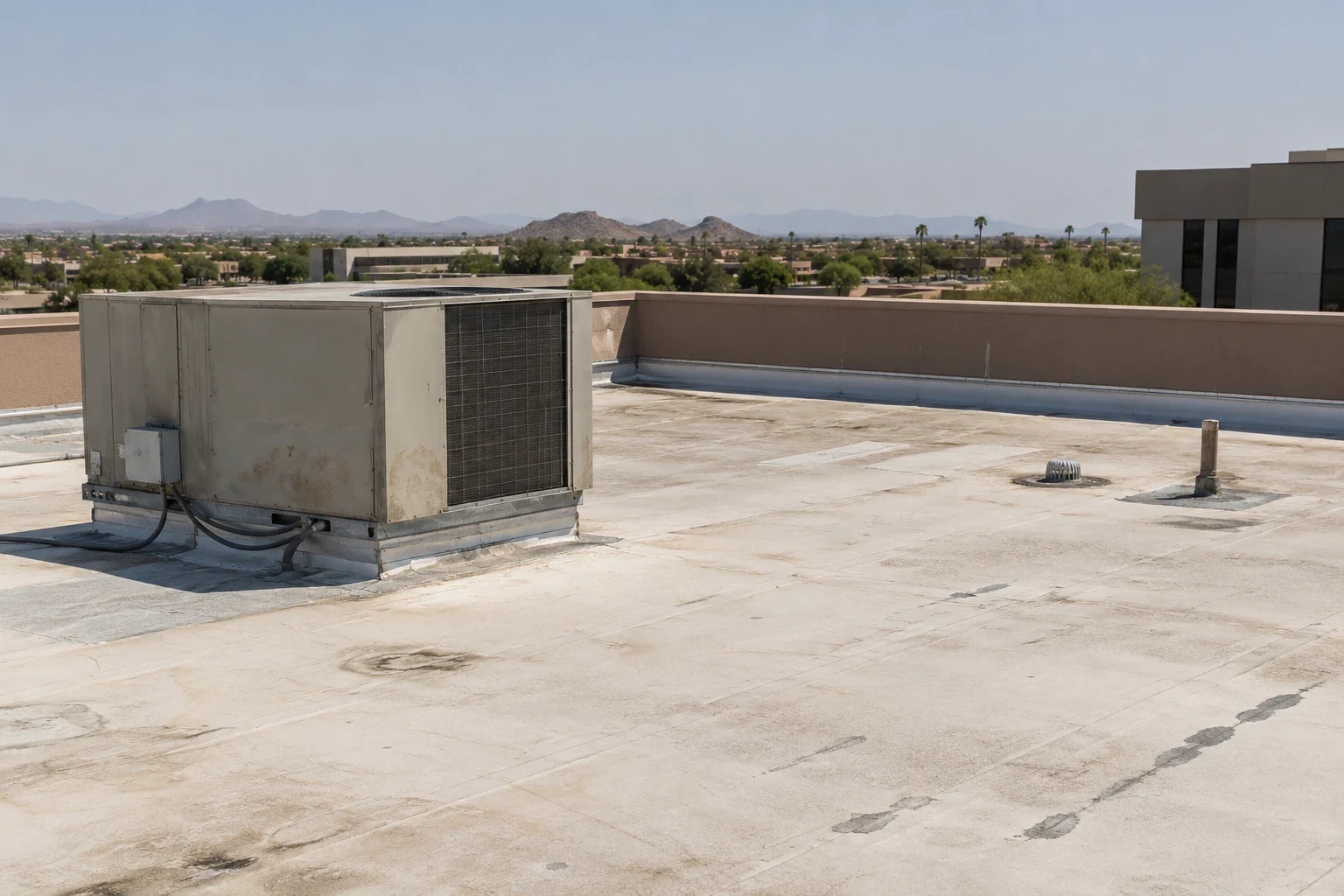
Plan the government roof project
Tell us which building has the problem and who the facility contact is. We will inspect the roof, explain your repair and replacement options, and lay out the prep and records each phase needs.
Related Roofing Work
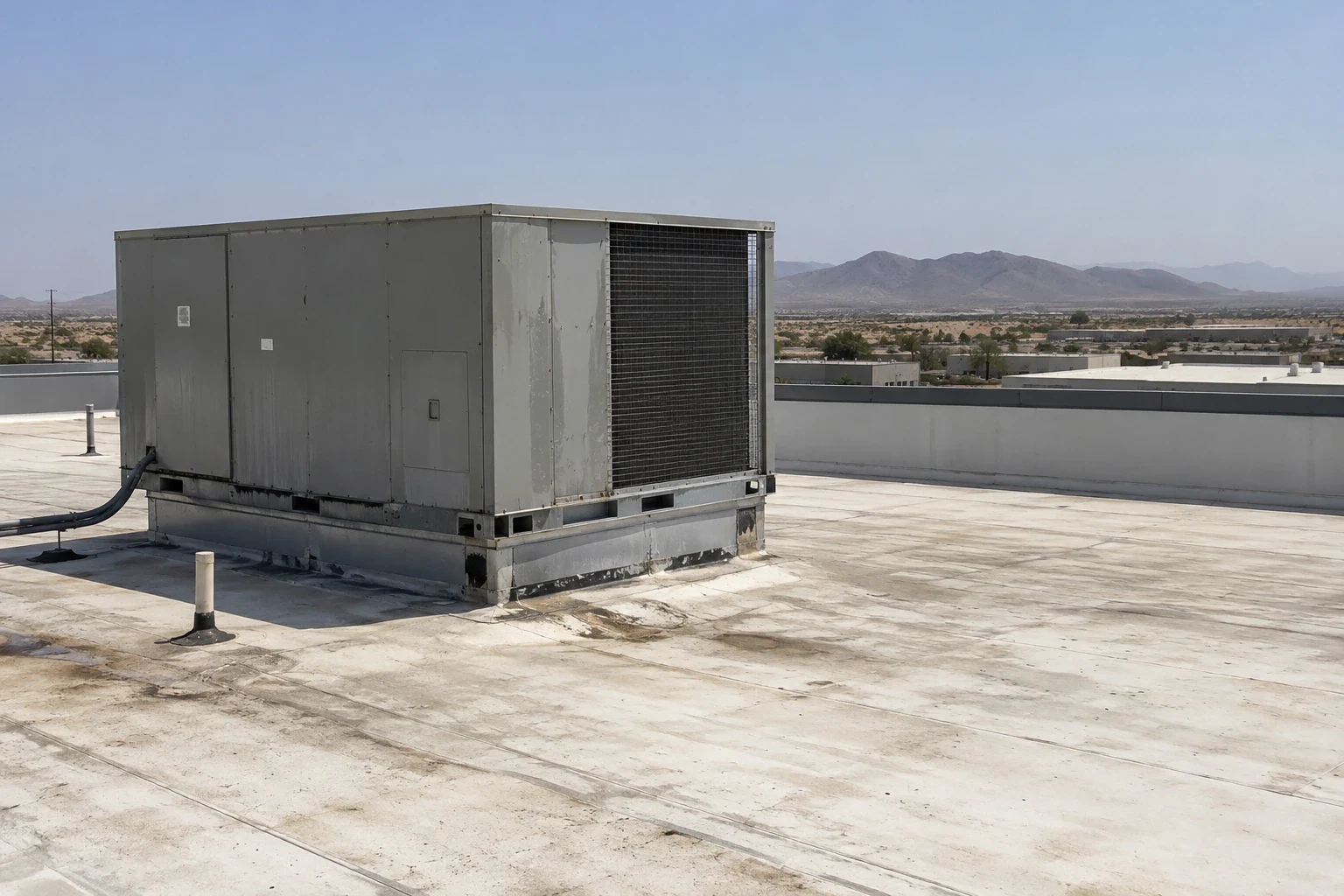
How should the repair quantity be defined?
A spot repair needs a clearly identified defect and sound roof around it to tie into. The estimate should say what membrane and insulation come out, what prep the new material needs and how it joins the existing roof. Wet insulation or rotted wood blocking can make the repair bigger. If so, we show where and explain the rebuild before changing the price. At a wall, we check the top of the flashing and the surface it fastens to. If the wall needs work first, another contractor may handle it. The estimate lists that step and what the roofer needs it to deliver.
For edge metal, coping and gutters, we inspect how the metal is fastened and the roof edge under it. A clogged downspout, a loose coping cap and a broken drain pipe are three different fixes. Each finding gets its own repair, and changing how water drains may need a plumber or designer. Blocking, cleats and fasteners belong in the price. The facility manager should see what each line buys, including any work another trade must finish before the new roof edge goes on.
How do you compare bigger renewal options?
A spot repair and a full renewal should be priced as separate options. Widespread wear needs inspection results to back it up. A coating needs a clean, sound roof, with defects repaired first. A recover means checking the existing layers and confirming the new system suits them. For government roof replacement, the estimate should list what comes off and what goes back: insulation, membrane, how it is fastened and every edge and penetration detail. It should explain why the findings support that system and what still needs to be checked.
If TPO is proposed, compare the insulation, fastening and flashing details, not just the sheet thickness. Hoisting, dumpsters and work by other trades can move the price. A school roof has to be scheduled around class times and campus rules. An office building roof follows its own tenant arrangements. A government building has its own public hours and security needs, and each bid should account for them. That way the agency is comparing fixes for the same problems and can see what each one includes.
What to Expect
What prep does the agency handle?
We walk the work area and the material routes with the facility contact. Together we decide which offices, hallways, public counters or records need protecting or moving. We ask about rules for dust, rooftop air intakes and entering the building. Noise and adhesive or primer odors get discussed based on which spaces sit under that day's work. Material deliveries and debris chutes may tie up parking or entrances away from the roof area. The agency decides how to keep the public clear of those zones. Prep tasks and who handles each one are agreed before a work date is set.
For reroofing over occupied spaces, each day has a set tear-off line and a plan for sealing any unfinished edges. If more damage turns up and the area grows, protection inside grows with it, and the revised price comes with photos. For rooftop equipment curbs and supports, the HVAC contractor shuts down and resets units. A change to a support may need an engineer's sign-off first. We confirm the curb or support is solid before flashing it, and the schedule shows which trade goes next whenever we are waiting on them.
What should the closeout record confirm?
Before we open any section, we plan how it gets sealed watertight that night. The plan marks unfinished edges and what has to happen before permanent flashing goes in. Daily reports keep temporary protection separate from finished work. If hidden damage changes the price, the report keeps the photos and the fix the facility contact approved, including any extra prep it caused. That keeps the job history useful for understanding what changed and why more quantity was approved.
At closeout, we photograph repaired details and patched test cuts by location. The file includes product information for the installed system, approved quantities and sign-offs from other trades. For preventive roof maintenance, it lists finished tasks and any specific follow-up inspection we recommend. If a mechanical or wall item is still open, the file names who handles it next. We answer emergency calls overnight, on weekends and on holidays. Once we can get on the roof, we can stop the immediate leak and explain what has to be checked for a permanent repair.
For a public building, write the scope so a facility manager can match each line item to a roof area and a specific repair. Before scheduling, find out about public entrances, essential services and any notice or access process the agency requires. Anything found that changes the scope gets photographed and priced for the facility contact's review. At closeout, separate finished work from open items, and hand over the records needed for maintenance planning. Nothing beyond the signed contract is assumed approved.
Questions Owners Ask
What should the first roof account distinguish?
The roof defect we actually found and the repair it calls for. Anything else, like an HVAC drain or wet insulation we could not see, is listed separately with its next step. The agency gets specific findings, not one lump sum for several unrelated leaks.
How should a changed construction quantity be justified?
With photos of the damage found and the extra work it needs. The change should show how much bigger the opening gets and any added protection inside. The new price is reviewed next to that finding before anyone approves it.
What should be included when comparing roof renewal offers?
What each bid tears off and keeps, the new system and every detail. Hoisting, other trades' work and protection for occupied spaces should be in the price. Each bid should explain how it fixes the problems found on the roof.
Which records support a later maintenance request?
Closeout photos by location, product information for the installed system and approved quantities. The file should also show patched test cuts and any work other contractors still owe, so the next visit starts at the right spot.